August 17, 2026
Ecommerce Business Ideas That Still Work in 2026
Nine ecommerce business ideas that still work in 2026, what each actually requires, and a filter for judging any idea before you commit to it.



Most lists of ecommerce business ideas are interchangeable. Sell candles. Sell pet accessories. Sell phone cases. The problem is not that these are bad ideas — it is that a list of products tells you nothing about whether you could actually run the business behind any of them, especially in a market where global e-commerce sales are projected to reach $7.89 trillion by 2028.
This guide is organised differently. Each idea comes with what it actually requires: capital, skills, and the specific thing that makes it hard. The ideas are split into three buckets: those that run on knowledge, those that run on taste, and those that run on operations. That distinction matters more than the product itself. Ecommerce already includes 28 million active businesses globally, so choosing an idea that fits your strengths matters more than copying a crowded product list.
There are no earnings claims here. Whether any of these works depends far more on who is running it than on which one you pick, whether you are an aspiring ecommerce founder starting on the side or planning to build a full-time online business.
What you will get: nine specific ecommerce business ideas, a five-question filter for judging any business idea including ones not listed, a short list of categories to avoid when starting an online business, and practical guidance on choosing based on your knowledge, design sense, professional skills, or ability to run operations well.
These suit you if you already know a subject deeply — through work, a hobby, or years of personal interest — and want relatively low upfront costs. The barrier is not money. It is expertise.
The advantage is credibility and sharp product judgement. You can evaluate suppliers, write product descriptions that actually help, and answer customer questions without guessing. The constraint is that you cannot fake it. Niche customers notice immediately when someone is reselling products they do not understand.
These can be some of the best online business ideas precisely because they are too small or too boring for big generalist retailers.
Not general sporting goods or broad lifestyle products. This is about the specific gear that people in one activity argue about online: bouldering shoes, home espresso grinders, aquascaping CO2 regulators, model-building airbrushes, fly-fishing reels, mechanical keyboard switches.
What the online store actually sells is a carefully curated selection of debated items — the products hobbyists discuss in forums, subreddits and social media groups. These buyers are intensely informed. They compare specifications, read forum threads from three years ago, and notice when a product description was copied from a manufacturer without any added insight.
Requirements:
The hard part: building trust. These audiences spot a generic dropshipping business instantly. What defends the position is technical depth that generalist competitors skip — detailed specifications, honest comparisons, and answers to the questions buyers are actually arguing about.
Practical first steps:
Filters, blades, seals, cartridges, straps, belts, gaskets. Unglamorous products that people need to buy again on a predictable cycle.
Concrete examples: air purifier filters for popular recent models, water-filter cartridges, vacuum cleaner bags, 3D printer filament and nozzles, bandsaw blades, watch straps, residential HVAC filters.
This is structurally attractive for several reasons. Purchases repeat — a customer who buys a replacement filter in January will need another in six months. Competition is thinner because few people want to build a brand around gaskets. And customers arrive already knowing what they need; your job is to have it, list it accurately, and ship it fast.
Subscription commerce fits this category naturally, because consumables deplete on a schedule. That makes recurring revenue realistic in a way it is not for most first stores.
The main skill requirement: obsessive accuracy with product data. Compatibility charts, model numbers, cross-reference tables. Get one part number wrong and returns spike. The quality of your data mapping between equipment models and compatible parts is, in this category, the product.
Validation approach: check marketplaces, manufacturer forums and search suggestions for phrases like "[model] replacement filter" or "[tool] spare parts." Note which model numbers from recent years are still in active use. If people are searching for it, demand exists.
This is not generic "make a course" advice. It is about templates, calculators, standard operating procedures, checklists, online courses, and micro-courses built from years of actually doing a specific job or running a certain type of business online.
Specific examples:
Notion-style systems also show clear demand, with one creator’s Notion template sales reaching $1 million in 2022.
Digital products have no shipping, no inventory, and margins close to the sale price. The global e-book market is worth about $59.2 billion, and ebook authors can earn between $251 and $20,000 monthly. Selling templates can provide recurring income when built around workflows people use repeatedly. Memberships are another repeatable format and can generate $1,000 to $10,000 monthly.
The hard part: distribution and trust. You can build the best template in the world and it will not sell itself. Selling digital products requires either an existing audience, search visibility, or partnerships. Strong writing skills also help when you package guides, lessons, and client-tested resources for small businesses, often using writing software to tighten the final product. We compared this route against physical products in ecommerce vs digital products.
Digital planners can earn roughly $1,000 to $4,000 per month. Creators can also sell online courses on online platforms, with typical monthly revenue of $500 to $5,000 and demand projected to exceed 1.1 billion buyers by 2029.
A simple starting workflow:

These suit people with aesthetic judgement, design skills, or the ability to curate things other people love. Capital needs stay relatively low, but building an audience and brand recognition in crowded online spaces takes time.
Social media plays a bigger role here than in the knowledge-based ideas. Instagram, TikTok and Pinterest are often core channels for marketing strategy and community-building. That means both opportunity and serious noise. Customization and personalization favour taste-driven businesses that can offer something a mass retailer cannot.
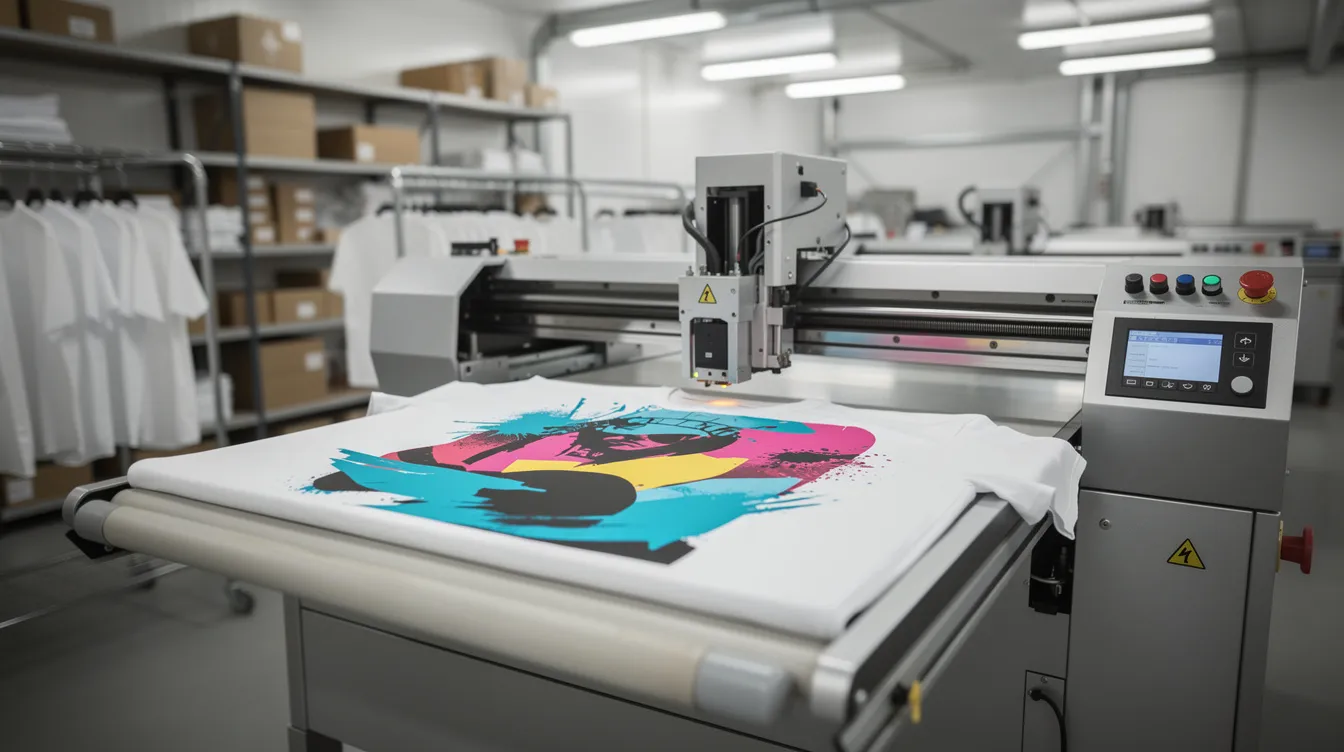
The model: you design graphics or slogans, a print partner handles production and shipping, and you focus on community fit and marketing. Print-on-demand lets you sell custom products without inventory — no warehousing, no bulk orders, no unsold stock. It reduces financial risk with minimal upfront costs, which makes it one of the more accessible small business ideas online. In practice, some print-on-demand businesses can earn roughly $1,000 to $5,000 per month, but results depend far more on strong niche fit than on the model alone.
But accessibility is the problem too. The market is flooded with generic t shirts, mugs and tote bags carrying forgettable slogans. Success is not about broad humour. It is about deeply specific communities: paramedics in a certain country, bouldering gym regulars, local coffee roasters, fans of a particular 1990s car model, members of niche professional associations.
Requirements:
What separates the designs that sell from the ones that do not is whether they genuinely reflect in-jokes, shared identity or cultural references the community recognises as one of theirs.
Simple launch plan:
You do not manufacture products yourself. Your contribution is the selection, the combination and the framing. You source complementary items from other brands or makers and package them into starter kits, gift boxes or seasonal sets.
Example niches:
Your value is curation and positioning: choosing products that genuinely work together and presenting them with clear use-cases and an unboxing experience that feels intentional. Bundles that lean into sustainability — refillable products, durable goods, locally made items — have a natural story to tell.
Challenges:
Starting lean: work with a handful of local or independent brands, agree small wholesale quantities, and photograph complete bundles to test demand before committing to inventory.
You make it. This is the most defensible position on this list and the least scalable. Ceramics, leather goods, jewellery, woodworking, natural skincare, artisanal food that can legally ship — if you have a genuine craft, this is a small business idea online with real staying power.
Why it works: copycats cannot easily match your exact process, materials and story. You own the brand not because you registered it but because you are the brand. Customers buying handmade items are not primarily price-shopping.
Requirements:
The difficulty is scaling. As demand grows you face a choice: train others to produce and risk losing the quality that made it work, raise prices and risk losing price-sensitive customers, or deliberately stay small and premium and accept a ceiling. Behind-the-scenes content — workshop shots, sourcing stories, process videos — turns content creation into marketing without feeling like advertising.

These suit readers comfortable with spreadsheets, logistics and managing suppliers rather than being the face of the brand. The creator is the process, not the person.
They demand more capital and risk tolerance but can build more scalable brands than purely solo handmade projects. They usually require a more formal business plan, attention to unit economics, and a longer ramp-up before meaningful traction.
Private label means you work with a manufacturer, specify improvements to an existing generic product, apply your own brand, and sell products online under that brand. You are not inventing something new. You are making something that exists slightly better and building a brand around it.
Examples of boring but attractive product types: storage bins, basic kitchen tools, office organisers, simple pet accessories, home-maintenance items that ship easily, drawer dividers, cable management clips.
Boring categories are the opportunity. Less competition, steadier demand, buyers who are not chasing trends. Nobody builds a personal brand around drawer organisers, which is exactly why there is room.
Requirements:
Dropshipping allows selling without holding inventory and can be started with limited funds — but it trades inventory risk for margin compression and less control. It is useful for testing demand; private label gives you a defensible position a dropshipping business cannot match. If you want to compare lower-risk entry points first, the detail is in the dropshipping alternatives article.
The main risk: you own the inventory if you are wrong. Unsold product does not disappear — it sits in storage, consuming capital.
Instead of importing, you source from manufacturers or wholesalers in your own country or region, then sell online with an emphasis on fast delivery and local quality.
Examples: locally made textiles, regional food products that can legally ship, home goods from nearby workshops, eco-friendly cleaning products produced domestically.
Benefits:
Challenges: higher per-unit costs than overseas manufacturing, suppliers who may be cautious about a small new account, minimum order quantities that strain startup costs, and geographic limits on range.
Starting process:
This model works well as a starting point because the feedback loop is fast: you can visit the supplier, inspect products and resolve issues in person.
Sell something physical or digital and bundle it with a paid service: installation, onboarding, consulting or done-with-you support.
Concrete examples: home-networking kits plus remote configuration calls, accounting templates plus a one-hour setup session, espresso machines plus barista training, website themes plus paid implementation, woodworking tools plus an introductory online coaching session.
The product may have modest margin on its own, but the service upsell changes the lifetime value per customer entirely. A modest template plus a substantial setup call is a fundamentally different business from the template alone.
Key requirement: genuine professional skill in the service area and reliable scheduling. If you sell a product with a promised setup call and cannot deliver it in a reasonable timeframe, the reviews will reflect that quickly. The service only sells if the buyer believes you are genuinely qualified.
This model suits people already consulting or freelancing offline who want to productise their expertise.
These work on any business idea — the nine above, a dropshipping business, a content-driven model, or anything else. If you cannot answer at least three clearly before spending meaningful money, the idea is not ready.
The idea passes — not because espresso is fashionable, but because the filter shows the structural conditions are in place. These are the same questions that structure the whole start-up sequence; the full version is in how to start an online store.
Not because they cannot work. Because they punish inexperience disproportionately and combine too many learning curves at once.
Anything heavily regulated. Supplements, cosmetics, children’s products, electronics requiring certification. The rules are real, the penalties are real, and learning them while learning ecommerce is two problems stacked on top of each other.
Anything trending right now. By the time a product is visible enough for you to notice, the margin has usually compressed. You are entering at the point where established sellers are exiting.
Anything heavy, bulky or fragile relative to its price. These can be viable businesses, but the logistics learning curve is steep and returns on heavy items are disproportionately expensive.
None of these are bad businesses. They belong later, after you understand basic marketing skills, customer acquisition and the operational rhythm of running a store.
People often struggle to find online business ideas because they start from trends instead of their own assets. They chase what sounds exciting or what someone said is profitable online. That is the wrong starting point.
Be honest about three things: how many hours per week you can commit, how much cash you are willing to risk and potentially lose, and whether you enjoy talking to customers or prefer working behind the scenes.
Commit to one idea for six to twelve months before judging it. Switching every few weeks resets the learning curve and is one of the most reliable ways to spend money without building anything. For a broader view of the models themselves, an overview of online business models for 2026 covers the full landscape, and the 90-day roadmap sets out what to do in which order once you have chosen.
Most people reading about online business ideas are not planning to quit their job tomorrow. They want to build something on the side, test it, and see if it has legs. That is the sensible approach — but it changes which ideas are realistic. In practice, online business starting is most realistic on the side when the model has low fulfilment complexity.
Suits limited, predictable hours:
Harder with limited time:
Many online businesses only become manageable part-time after systems and routines are documented.
Set fixed weekly time blocks, batch similar tasks together, limit new tool experiments to one per month, and decide on an operating rhythm you can communicate clearly. Progress will be slower, but risk is lower.
The idea matters less than most people starting out believe. What separates a successful online business from one that folds is generally: knowing your numbers, evaluating suppliers accurately, writing product pages that convert, and handling customer support without it consuming the week.
Core transferable skills:
These transfer across every idea on this list. An ecommerce learning path can structure the sequence, and a guide on the skills that actually pay in 2026 covers where the leverage sits now.
One caution that applies to all nine: resist building the operation before there is anything to operate. Tools, automations and integrations belong after the first customers, not before. That pattern is common enough that there is a dedicated article on why most stores get stuck in tool chaos, and the systems that genuinely need to exist first are covered in the five core ecommerce systems.
There is no honest single answer. Profitability depends on execution, market, pricing and costs far more than on the model itself. Digital products have the highest theoretical margins and the hardest distribution; private label can build defensible positions with real inventory risk. The best ecommerce business is not the one with the highest ceiling — it is the one where you can control costs, differentiate meaningfully, and serve a buyer community you understand.
No, and originality is often a warning sign. If nobody sells something similar at all, the more likely reason is lack of demand rather than a hidden opportunity. Focus on doing the basics better: service, product descriptions, curation, bundling, or targeting an underserved segment. A well-executed version of an existing idea beats an original one almost every time.
Look at the top three to five stores ranking for your main keywords and ask what you could offer that they clearly do not. If the only honest answers are lower prices or a nicer website, the niche is probably too competitive for a beginner. A store selling general fitness equipment competes with giants; a store selling accessories for home gym power racks competes with almost nobody. Competition itself is not the problem — undifferentiated competition is.
No. Testing two ideas at once usually means executing both badly. Each has its own learning curve: different suppliers, different buyers, different marketing channels. Pick one, give it a clear budget and timeframe, and treat the results as data. Once a first store runs smoothly, adding a second becomes realistic. Trying to build multiple channels at once—for example a store, a youtube channel, and service offers—usually slows learning rather than speeding it up.
Easiest depends entirely on existing skills. For professionals with domain knowledge, simple digital products may be the fastest path to a first sale. For visually oriented founders, a print on demand store or curated reselling may feel more natural. For people who prefer process and logistics, even a small private-label test can work. The right online business idea is not the one that sounds easiest on paper — it is the one where your existing skills give you an unfair advantage on day one.

The useful question is not which ecommerce business idea is best, because even a great online business idea only works if you can operate it consistently. It is which one you could run competently on a bad week, six months in, when it is not yet working.
That question narrows the list quickly, and it narrows it differently for every person reading it. An idea that suits someone with a workshop and no capital is a poor fit for someone with capital and no time. Neither is better — they are different tools for different people.
Your next step:
If you want a structured path rather than another list, the Webgru Academy covers fundamentals, platform setup, product research, sourcing and scaling in one sequence — built for beginners, no hype. The Starter tier begins at $199 with a 14-day money-back guarantee. You can also read Marko’s background or get in touch.
Last updated: August 2026. Cost indications in this article are illustrative and vary widely by country, category and supplier. Nothing here is legal, tax or financial advice. Results depend on execution, category, market and effort.
Our latest news and trending topics
Learn E-Commerce with clarity, discipline and real experience.


.png)