March 27, 2026
Ecommerce Skills 2026: That Pay From AI to Analytics
The most valuable ecommerce skills in 2026: AI systems, analytics, CRO, SEO, retention, and operations — plus a clear learning path to build a real business.


In an increasingly digital marketplace, the ecommerce industry is evolving rapidly, with businesses shifting from traditional brick-and-mortar models to online platforms. To thrive in this competitive ecommerce industry, professionals must develop both hard skills—such as analytics, SEO, and inventory management—and essential skills that are fundamental for success in 2026. Essential skills for 2026 ecommerce include mastering AI-driven automation, advanced data analytics, and delivering a personalized customer experience.
The pace of change in ecommerce is faster than ever before. The shift to a digital marketplace is accelerating this transformation, as more businesses and consumers engage in online transactions. New technologies, evolving consumer expectations, and global competition mean that ecommerce professionals must constantly adapt and learn new skills to stay ahead.
AI didn’t kill ecommerce.
It made it more competitive.
Today, anyone can launch a store —
but very few can build a system that converts and scales.
The biggest shift in 2026:
👉 From “tools” → to systems
People who understand:
…will outperform everyone else.
Mastering core skills and key skills in these areas is essential for building effective ecommerce systems and staying competitive in the evolving digital landscape.
Running ads ≠ business
Posting content ≠ strategy
Single-skill operators fail.
System thinkers win.
Both soft skills and technical skills are necessary for long-term success in ecommerce. Soft skills are crucial for e-commerce marketers to connect with customers and each other.
If you want a structured path, we built one — especially if you’re still figuring out how to choose the best e-commerce course in 2026.
In 2026, success in ecommerce will depend on mastering a blend of hard skills, soft skills, and technical expertise. These categories cover the most important skills and ecommerce skills needed to thrive in the rapidly evolving online retail landscape. Understanding the distinction between hard and soft skills is essential, as both are foundational for starting, expanding, and maintaining a competitive ecommerce business.
SEO, ads, content, positioning.
To drive growth in ecommerce, professionals need to master a range of skills including search engine optimization (SEO), paid advertising, content creation, and brand positioning. Search engine optimization (SEO) is crucial for improving search rankings, increasing visibility, and driving high-intent traffic to online stores through strategies like keyword optimization, site architecture, and content creation. Social media platforms are essential for sharing content, promoting brand awareness, and running targeted advertising campaigns to reach specific audiences. Digital marketing is another key growth skill, integrating creative storytelling with data analytics and emerging technologies to optimize marketing efforts and stay competitive. Digital marketing combines creative storytelling with data analytics to reach the right audience at the right moment.
CRO, funnels, checkout optimization.
Conversion skills also include optimizing customer experience, delivering personalized customer experiences, and driving customer engagement. E-commerce marketers need to understand how to create a seamless customer experience to build trust and loyalty.
Automation, analytics, retention, operations.
In 2026, e-commerce professionals must master systems skills to stay competitive. This includes understanding how to automate repetitive tasks, analyze data for insights, retain customers through personalized experiences, and optimize operational workflows.
Essential systems skills also include project management, inventory management, and automation tools. Project management is crucial for organizing and coordinating multiple e-commerce campaigns effectively. Inventory management ensures optimal stock levels and efficient supply chain operations, while automation tools streamline customer support, order processing, and marketing activities.
Because they compound.
Strong systems skills enable businesses to achieve greater operational efficiency in fulfillment and return processes, which has become a key competitive differentiator. Additionally, integrated inventory management systems and real-time stock visibility drive supply chain efficiency, helping companies optimize order fulfillment, reduce errors, and scale operations more effectively.

Creating a compelling offer and positioning is crucial for ecommerce success in 2026. To stand out in a crowded market, businesses must develop strong sales strategies and have a clear understanding of their potential customers. This ensures that offers are tailored to attract and convert visitors, ultimately driving growth and loyalty.
Bad offer = no sales.
Even with traffic.
A compelling offer not only drives conversions but also helps foster customer loyalty and build a base of loyal customers, which is essential for long-term ecommerce success.
Effective pricing strategies not only influence customer perception but also help manage acquisition costs and maintain optimal inventory levels.
You don’t win by being cheaper.
You win by being clearer and more relevant.
Leveraging customer insights and understanding consumer behaviors enables brands to craft personalized, emotionally engaging campaigns that set them apart from competitors. Additionally, blending seasonal trends and cultural moments into content—while maintaining brand authenticity—is crucial for standing out in the evolving ecommerce landscape.
Designing Effective Funnels
In 2026, ecommerce skills will require a deep understanding of how to design effective funnels that guide customers from awareness to purchase. Effective funnel design is a key part of any marketing campaign and requires strategic planning. Strategic planning involves mapping the customer journey to ensure all marketing channels work together effectively. This ensures that every touchpoint is optimized for conversion and retention.
Funnels convert better than generic stores. User experience and the use of content management systems are critical for optimizing landing and product pages, as they enable marketers to efficiently create, manage, and deliver engaging content across multiple platforms. A well-designed website is essential for providing a great user experience in e-commerce.
Every extra step kills conversion.
Reducing checkout friction not only increases conversions but also improves customer satisfaction by creating a seamless experience, which sets the stage for effective post-purchase follow-ups. E-commerce businesses should also track key metrics like conversion rate, customer acquisition cost, and average order value to assess performance.
Attention is shorter → funnels must be simpler.
In 2026, ecommerce funnels need to be streamlined and intuitive, minimizing friction at every step. Shoppers expect a seamless journey from discovery to checkout, with fewer distractions and faster load times. Modern funnels must also engage customers through interactive content and personalized experiences. Interactive content, such as quizzes and polls, offers immersive experiences that keep users engaged while gathering insights for future personalization.
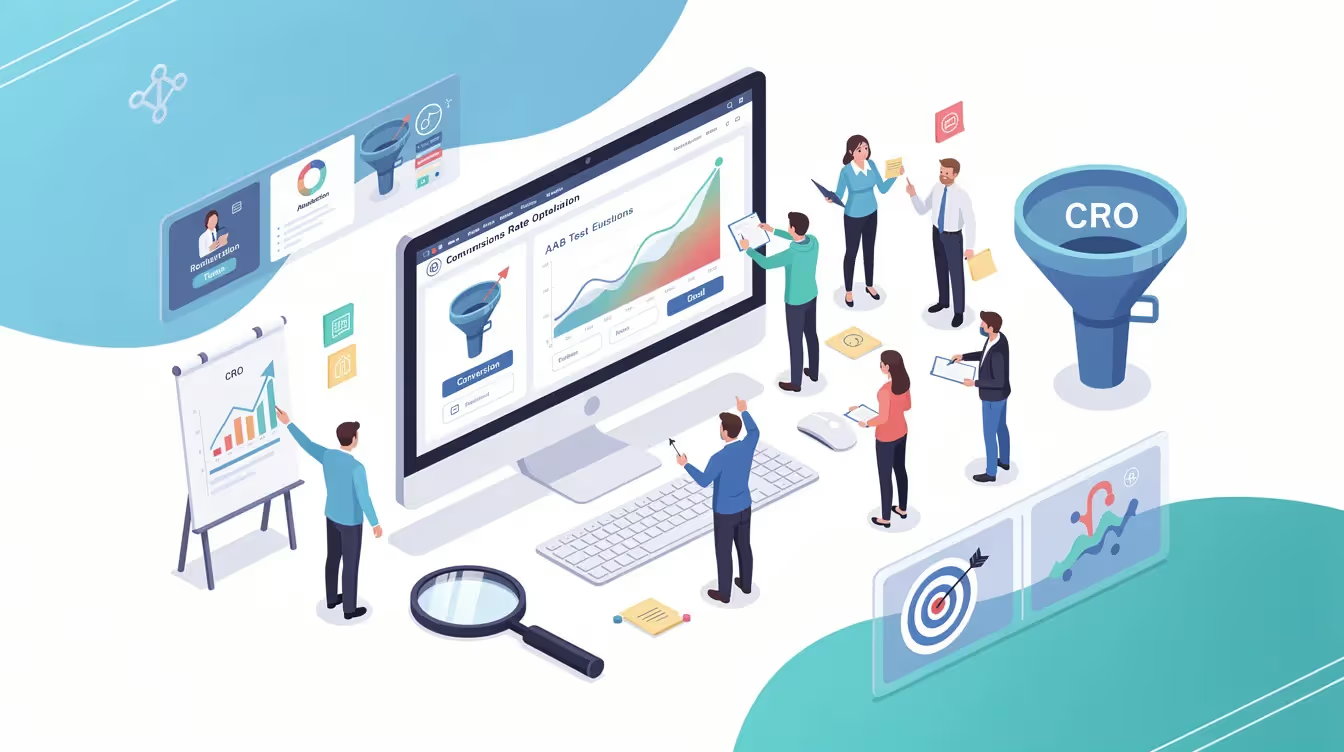
Conversion Rate Optimization (CRO) is the process of increasing the percentage of website visitors who take a desired action, such as making a purchase or signing up for a newsletter. In the context of ecommerce, CRO is essential for maximizing revenue from existing traffic.
On-page SEO and technical SEO are important aspects of conversion rate optimization, as they help ensure that your site is both discoverable and user-friendly. SEO is crucial for improving visibility in search engines and driving traffic to e-commerce stores.
By analyzing user behavior, testing different elements, and making data-driven changes, ecommerce businesses can improve their conversion rates and overall profitability.
Optimizing these elements should be your first priority. Optimizing for search engines is key to achieving SEO success, as it helps your site rank higher and attract more qualified traffic. Search engine optimization (SEO) is essential for e-commerce businesses to attract high-intent buyers and drive sales.
Data analytics skills are essential for tracking e-commerce performance and making informed business decisions.
Analyzing data and making informed decisions are critical for avoiding common CRO mistakes, as they help teams interpret metrics, recognize behavioral patterns, and base their strategies on reliable insights. Data analysis is a key driver of success in e-commerce marketing, enabling businesses to optimize performance and achieve better outcomes.
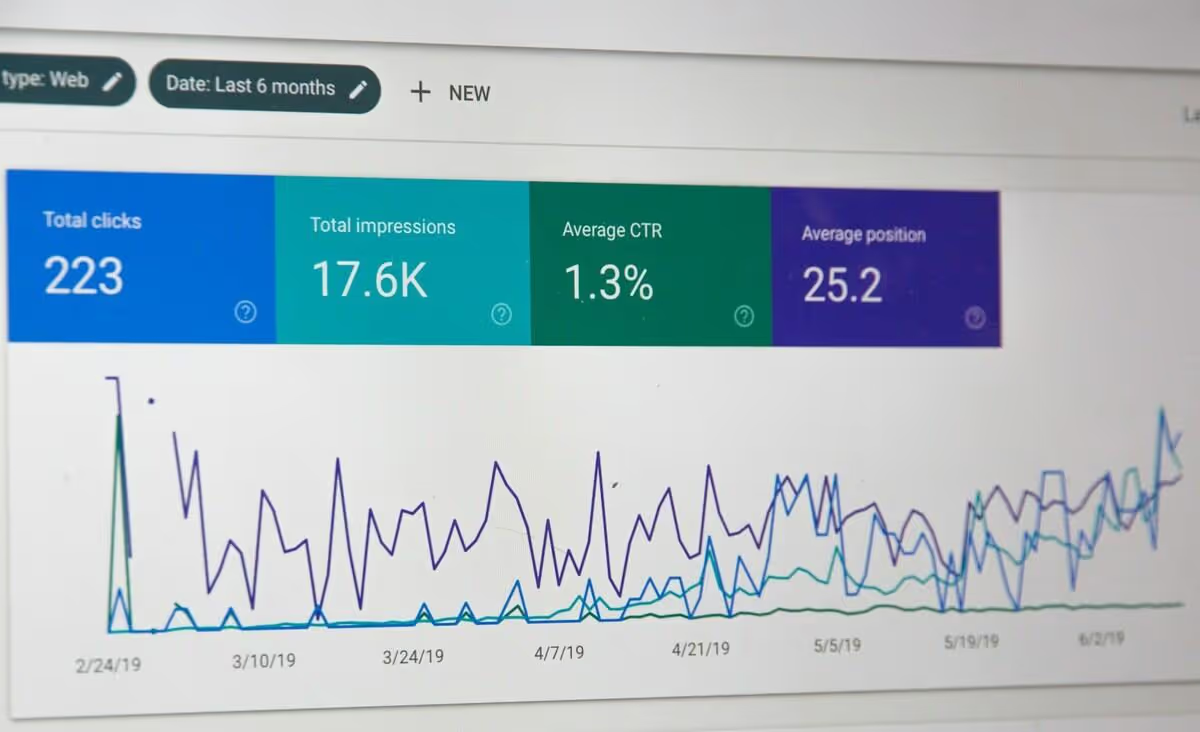
Analytics and Tracking: The Foundation of Ecommerce Skills 2026
In 2026, analytics and tracking will be more important than ever for ecommerce professionals. Data analysis, customer data, and actionable insights are central to effective analytics and tracking, enabling businesses to understand customer behavior and optimize their strategies. Mastery of analytics tools will allow ecommerce teams to monitor performance, identify opportunities, and make informed decisions. Data analysis and first-party data utilization are critical for enhancing customer retention and predicting trends.
Strong data analysis skills and data analytics are necessary for interpreting these metrics effectively. Data analytics helps businesses make informed decisions about marketing strategies.
Focus on behavior, not vanity metrics.
Tracking GA4 events helps analyze customer behavior and enables effective customer segmentation. Customer segmentation relies heavily on behavioral data like purchase history.
Most data is imperfect.
But direction matters.
Attribution analysis supports informed business decisions and helps identify market trends by revealing which strategies are driving results. Data analysis also helps pinpoint the most effective marketing channels.
If you can’t measure — you can’t scale.
Real-time data monitoring and focusing on data velocity are now essential for maximizing profit. The focus is shifting from data volume to data velocity, emphasizing real-time data analysis.
In 2026, ecommerce skills will be more important than ever as businesses compete in a rapidly evolving digital landscape. Foundational skills such as search engine optimization, SEO skills, and content marketing are essential for long-term growth and online visibility.
Content marketing plays a key role in customer engagement and SEO success for e-commerce businesses, helping to attract and retain high-converting customers.
SEO is a long-term channel that can drive compounding traffic to your ecommerce site. Technical abilities, including proficiency with technical SEO, are essential for achieving SEO success, as they help improve site speed, mobile responsiveness, and navigation for better search engine indexing and ranking. Technical skills related to website management and user experience design are also vital for e-commerce success. Unlike paid ads, which stop delivering results as soon as you stop spending, SEO efforts can continue to generate organic traffic and sales over time.
Not just traffic.
👉 Intent-driven content wins.
User-generated content, authentic storytelling, and video content are highly effective for driving conversions. User-generated content (UGC) is a cornerstone of modern e-commerce, as people trust recommendations from other customers more than traditional ads. Authentic storytelling through human-led content is also crucial for building brand authority. Additionally, video content continues to dominate, especially on platforms like TikTok, which holds massive sway over younger audiences.
This is how you dominate search.

Paid Advertising
Paid advertising is a key component of any successful ecommerce strategy. Businesses use paid ads not only to reach new audiences but also to boost sales and manage acquisition costs. By investing in targeted campaigns, companies can quickly increase their visibility and attract potential customers. In fact, leveraging AI in paid advertising can help businesses cut acquisition costs by up to 50%, making campaigns more efficient and cost-effective when integrated into broader AI automation systems for e-commerce.
Only after validation.
Online courses can help marketers learn how to effectively launch and manage paid ads.
Focus on:
Email marketing remains a cornerstone of ecommerce skills in 2026, especially for driving customer retention and repeat purchases. Customer relationship management and customer retention are central to effective email marketing, as integrated ecommerce systems consolidate customer data and enable personalized marketing strategies. Automated email marketing allows e-commerce businesses to reconnect with past customers and promote new offers, making post purchase follow ups more efficient and impactful.
First impression = revenue driver.
Welcome flows are your first opportunity to engage new customers and set the tone for your brand. These flows should deliver personalized customer experiences by leveraging customer data to tailor messaging and offers. Marketers need to ensure compliance with privacy laws when using customer data for personalization.
Recover lost revenue.
Abandoned cart flows are a powerful tool for ecommerce businesses to recover lost sales. They also present a valuable opportunity to engage customers and increase customer engagement by reminding shoppers of their interest and encouraging them to complete their purchase. By sending timely reminders and incentives, you can win back customers who may have otherwise been lost.
Upsells and repeat customers.
In 2026, ecommerce skills will increasingly focus on maximizing customer lifetime value through strategic post-purchase flows. Post-purchase follow-ups are essential for reinforcing customer relationships and ensuring ongoing engagement. These follow-ups are a key component that helps reinforce customer relationships and ensure ongoing engagement after a purchase. By implementing effective post-purchase follow-ups, businesses can drive upsells, encourage repeat purchases, and boost overall customer satisfaction.
Retention > acquisition long-term.
Retention systems are essential for sustainable ecommerce growth. These systems help foster customer loyalty and build a base of loyal customers through effective community management. Community management is about creating authentic connections that turn casual followers into loyal advocates. By focusing on retention, brands can maximize customer lifetime value and reduce reliance on costly acquisition campaigns, and when you need outside guidance, you can always contact the Webgru team for strategic support.
In 2026, ecommerce operations and fulfillment will demand a new set of skills to stay competitive. Inventory management, supply chain efficiency, and maintaining optimal inventory levels are critical for operational success. Ecommerce professionals must be adept at leveraging technology to streamline processes, improve accuracy, and meet customer expectations.
Supply chain efficiency is improved by integrated inventory management systems and real-time stock visibility, which help optimize order fulfillment and scale operations effectively.
Margins are won in operations.
For ecommerce businesses, operational efficiency is a key differentiator that directly impacts profitability.
Standardization = scalability.
Risk management is an important part of standardizing operations, helping businesses identify and address potential threats early. In e-commerce, risk management is a critical component of strategic planning to anticipate potential issues and ensure smooth scaling, and it often benefits from direct contact with experienced Webgru strategists.

The ecommerce landscape is rapidly evolving, and by 2026, professionals will need to master a new set of ecommerce skills to stay ahead. Innovative solutions like AI-powered recommendations are transforming ecommerce, enabling businesses to deliver more personalized experiences and drive better results. Automation and AI systems are no longer optional—they are essential tools for streamlining operations, optimizing marketing, and improving customer engagement, especially when they’re part of a coherent e-commerce systems stack for 2026.
AI enhances human creativity rather than replacing it in marketing strategies, empowering teams to experiment and develop more effective campaigns. In fact, AI-powered recommendations can increase conversion rates by 15-20%, making them a critical component of successful ecommerce strategies.
AI is a multiplier.
Not a strategy.
Mastering tools like Shopify Magic or HubSpot AI for content automation is necessary for ecommerce success.
Agentic commerce is emerging, requiring new skills in AI management. Agentic commerce involves AI assistants that act on behalf of customers, so ecommerce professionals will need to develop skills in managing these AI systems.
First system → then automation.
Building a business system is crucial for anyone looking to succeed in ecommerce. In fact, building a business system is essential for anyone aiming to run a successful online business, become an ecommerce entrepreneur, or grow an online enterprise. It allows you to automate repetitive tasks, delegate responsibilities, and scale your operations efficiently. By having a system in place, you can focus on strategic growth rather than getting bogged down in daily operations, following a clear 90-day roadmap to your first $10K online.
Agencies ≠ ownership.
Choosing the right e-commerce platform is a key part of building ownership in your online business. Selecting the right e-commerce platform can significantly impact operational efficiency and sales growth.
Skills = control.
Building internal capability is essential for long-term success in ecommerce. Ecommerce managers and ecommerce professionals benefit greatly from building strong internal skills, enabling them to customize storefronts, improve user experience, and quickly implement updates or A/B testing to boost sales performance. E-commerce professionals must also adapt to new technologies and trends to remain competitive in the market.
Trends fade.
Systems scale.
Building robust systems is essential for thriving in the competitive ecommerce world and ecommerce market. The ecommerce market is a key segment within the retail industry, experiencing rapid growth and significant revenue projections.
Want the complete learning path? 👉 Start Webgru Academy Starter
Offer, funnel basics, metrics.
To succeed in ecommerce in 2026, you need to master the fundamentals. Learning these fundamentals means developing both hard skills—like SEO, website management, data analysis, and inventory management—and soft skills such as communication and adaptability. Understanding how to craft compelling offers, build effective sales funnels, and track key metrics will set you apart from the competition.
Launch your first system with guidance from an E-Commerce & AI Academy built around proven systems.
Optimize and grow using a structured E-Commerce & AI Academy program.
To scale your ecommerce business in 2026, you need to leverage advanced analytics and retention strategies. Predictive analytics and first-party data utilization are critical for scaling with analytics and retention. Predictive analytics helps marketers anticipate customer behavior and manage inventory effectively. Data analysis and first-party data utilization are also essential for enhancing customer retention and predicting trends. By focusing on these areas, you can make smarter decisions, improve customer experiences, and drive sustainable growth.
Only after stability.
Are you looking to future-proof your career with the top ecommerce skills 2026 will demand? Our academy not only covers the latest in ecommerce skills, but also provides in-depth training in e-commerce marketing, including essential strategies, technological advancements, and cross-team collaboration. We also focus on content creation and storytelling, which are essential skills for e-commerce marketers in 2025. Join us to stay ahead in the rapidly evolving digital marketplace with our structured e-commerce courses and AI training at Webgru Academy.
Clear progression.
No guesswork.
Faster learning.
From basics to systems.
Start Webgru Academy Starter ($199) inside the E-Commerce & AI Academy that helps you build, scale, and automate online businesses
FAQ
Q: Why are ecommerce skills important in 2026?
A: Mastering ecommerce skills in 2026 is essential for e-commerce success and for building successful e-commerce businesses. These skills help business owners optimize operations, improve customer experience, and stay competitive in the rapidly evolving digital marketplace.
Offer + funnel.
No.
Yes — with structure.
60–90 days to get solid.
Funnels + CRO.
To stay ahead in the rapidly evolving digital marketplace, focus on developing and refining your ecommerce skills 2026. Building effective systems is the best way to leverage these skills for long-term success and sustainable growth.
Skills alone don’t make money.
Systems do.
Our latest news and trending topics
Learn E-Commerce with clarity, discipline and real experience.


.png)
.avif)