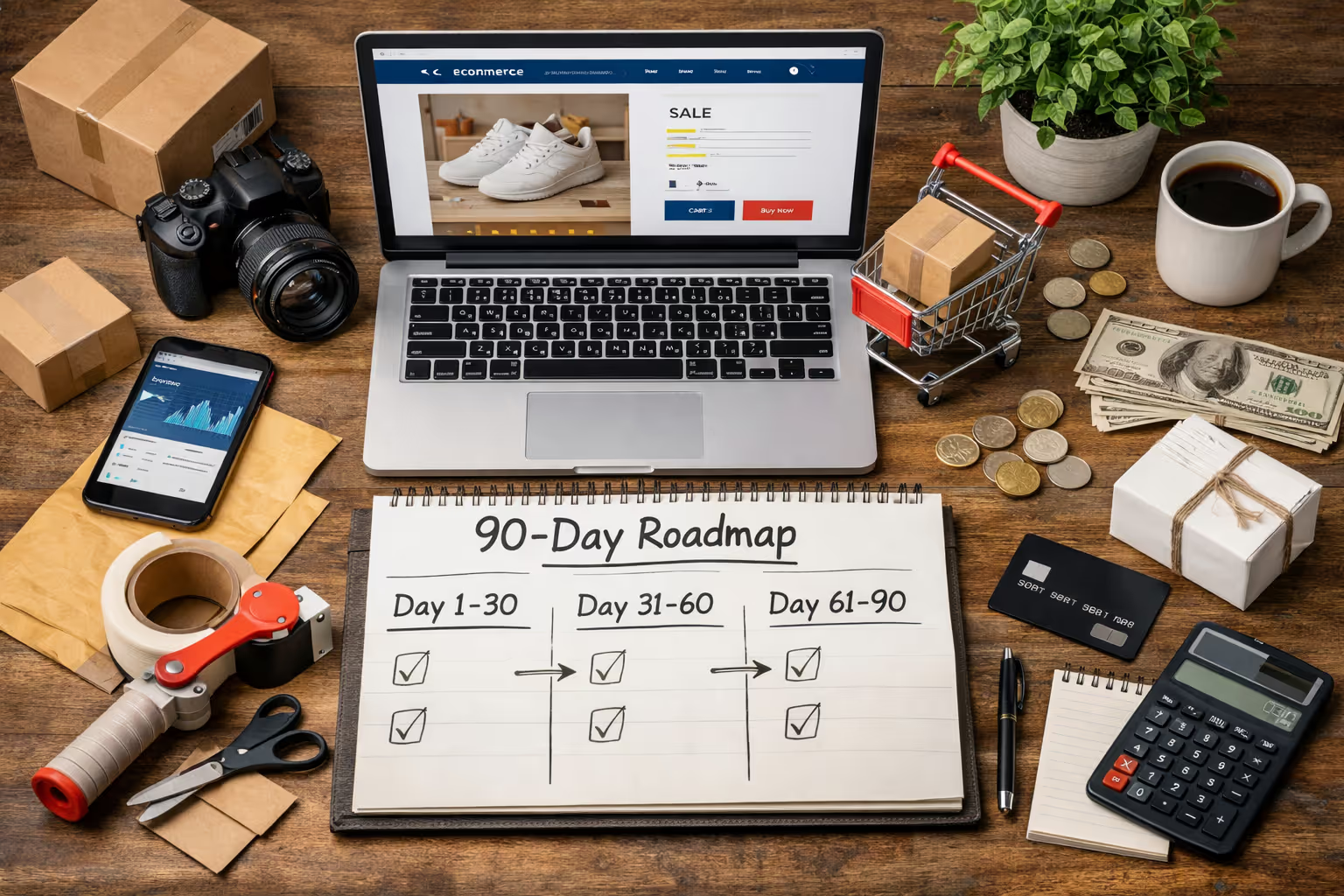
Start Ecommerce Business: From Zero to Your First $10K Online - A 90-Day Roadmap
Start your ecommerce business with this proven 90-day roadmap. Learn how to build your offer, launch your store, create a sales funnel and reach your first $10K online.
TABLE OF CONTENT
Starting an ecommerce business has never been easier — but building a profitable ecommerce business has never been harder.
Platforms like Shopify, AI tools, and payment processors allow anyone to launch an online store within hours. Yet most beginners never reach consistent sales.
Why?
Because they focus on tools instead of systems.
The truth is simple: your first goal in ecommerce isn’t becoming a millionaire — it’s proving that your online business model works.
That means getting your first real sales, validating your offer, and building a repeatable system.
This guide shows a 90-day ecommerce roadmap designed to help you move from zero to your first $10K online using a structured strategy. In a competitive market, it's also essential to drive traffic to your store through digital channels and community engagement to achieve those first sales.
You’ll build five key foundations:
Offer
Store
Funnel
Traffic
Systems
A clear value proposition is crucial for building trust and differentiating your brand in a competitive market.
If you build these correctly, your ecommerce roadmap becomes predictable.
If you skip them, your business becomes guesswork.
The Truth About Starting E-Commerce in 2026
The internet is full of content about “getting rich with ecommerce.”
But successful founders rarely follow hype.
They follow a structured ecommerce business roadmap.
A clear company description and detailed business plans are essential for laying the groundwork for a successful business.
Why Most People Fail Before They Launch
Most beginners fail before they even start.
Common mistakes include:
researching endlessly
constantly switching product ideas
overbuilding their store
never launching
Instead of focusing on a simple ecommerce launch strategy, they try to perfect everything.
The most successful founders launch fast, test fast, and improve fast.
The Real Game Is Systems, Not Motivation
Motivation is temporary.
Systems create results.
A successful ecommerce business relies on repeatable systems:
traffic acquisition
conversion optimization
customer follow-up
retention systems
This is why successful founders focus on ecommerce systems, not hacks.
Your First Goal Isn’t $1M — It’s Proof
The first milestone of every online business roadmap is proof.
Proof that:
customers want your product
your funnel converts
your traffic strategy works
Once you reach your first ecommerce sales, scaling becomes a math problem.
What You Need Before Day 1 (Pre-Launch Checklist)
Before starting your 90-day ecommerce roadmap, you need several key foundations. Conducting thorough market research and market analysis is essential to validate your business idea, identify a specialized niche, and understand customer behavior. These steps help ensure your e-commerce business is built on a solid understanding of your target audience and market, setting you up for long-term success.
Pick One Business Model
Your ecommerce model determines everything.
Common models include:
Business to business (B2B): In this model, businesses sell products or services directly to other businesses. This often involves recurring orders and larger transactions. Examples include Alibaba and companies that supply office equipment to other businesses.
Business to consumer (B2C): Here, businesses sell products directly to consumers. Well-known examples are Amazon and Walmart.
Consumer to consumer (C2C): This model connects consumers so they can exchange or sell goods and services to each other, typically through online marketplaces like Craigslist and eBay.
Other popular approaches include dropshipping, where businesses sell products without holding inventory as suppliers handle storage and shipping; wholesaling, which involves buying products in bulk at a discount to sell at a markup; white label products, which are generic goods that businesses can brand as their own after purchasing from a distributor; and private label products, which are made by manufacturers specifically for a single retailer to sell under its own brand.
Each of these models creates different revenue streams and opportunities to diversify your offerings. By analyzing what other businesses are doing—such as their product quality, features, and pricing—you can identify gaps in the market and choose the ecommerce model that best fits your goals.
Physical Products
dropshipping
private label
print-on-demand
Digital Products
online courses
templates
memberships
Service-Based Ecommerce
consulting
digital services
hybrid models
Beginners should always choose the simplest model possible.
Complexity slows down execution.
Define Your One-Sentence Offer
A strong ecommerce offer answers three questions:
What do you sell?
Who is it for?
What problem does it solve?
A clear value proposition is essential for building trust and guiding potential customers through the consideration stage of the ecommerce sales funnel, where they evaluate your brand's credibility and the unique value you provide.
Example:
“We help busy professionals improve productivity with digital planning systems.”
Clarity dramatically improves conversion rates.
Set Your Minimum Numbers
Every ecommerce startup needs clear targets.
Define:
revenue goals
marketing budget
time investment
traffic targets
It's also important to set key performance indicators (KPIs) to measure the effectiveness of your marketing activities and overall business performance. For new e-commerce businesses, marketing budgets typically range from 5% to 30% of overall revenue, depending on your growth strategies.
Once you understand the math, your ecommerce strategy becomes measurable.
Choose Your Platform
Most beginners start with Shopify.
Other platforms include:
WooCommerce
Kajabi
Gumroad
Webflow ecommerce
When choosing a platform, make sure it supports multiple payment options and enables a seamless checkout process. Offering various payment methods, including one-tap digital wallets, can increase conversions by up to 50%.
Your platform matters less than your funnel strategy.
The Biggest Beginner Mistake
Many entrepreneurs build stores before clarifying their offer.
But successful ecommerce businesses start with positioning, not design.
The 90-Day Roadmap (Week by Week)
This roadmap follows a proven structure:
Idea → Launch → First Sales → Optimization.
It is designed to guide you through the ecommerce funnel—a visual representation of the five fundamental stages a customer goes through before buying a product: Awareness, Interest and Evaluation, Desire, Action, and Loyalty and Re-engagement. Understanding the rapidly growing ecommerce market and its significance in retail sales is essential for optimizing each stage of this funnel and developing effective marketing strategies.
Days 1–14 — Foundation
Your focus is building the core structure. Identifying your target audience and highlighting the key features of your ecommerce business are essential steps to set a strong foundation. This ensures your company description, branding, and marketing strategies are aligned for maximum impact.
Offer and Positioning
Define:
your target customer
your core problem
your product positioning
This is the foundation of your ecommerce marketing strategy. Clearly defining your offer and positioning also lays the groundwork for building strong customer relationships, which are essential for long-term engagement and loyalty.
Product Selection and Pricing
Choose products with:
clear demand
strong differentiation
healthy margins
Avoid crowded markets unless you have a unique angle.
Effective inventory management is crucial at this stage, as product inventory is often the largest expense for e-commerce businesses and requires careful planning to avoid overstocking.
Store Setup Essentials
Your store only needs essential pages:
homepage
product page (optimize product pages with detailed descriptions, high-quality images, and customer reviews to build trust and guide purchase decisions)
checkout
about page
contact page
A secure, user-friendly online store should have high-quality product photos and clear descriptions for effective marketing.
Set up social media accounts on platforms like Instagram, Facebook, and TikTok to promote your store, share updates, and drive traffic.
A simple store can start generating sales immediately.
Tracking Setup
Install tracking tools before running traffic:
Google Analytics
Meta Pixel
email capture tools
CRM automation
Tracking enables you to gather actionable insights from customer data, helping you optimize your conversion funnel and personalize your marketing strategies.
Tracking allows you to optimize your conversion rate.
Days 15–30 — Build the Funnel
Now you build your ecommerce sales funnel. Ecommerce brands must focus on creating initial awareness as the first stage of the funnel, ensuring potential customers first encounter their brand before moving them toward conversion.
Landing Page Structure
A strong landing page includes:
clear headline
problem awareness
product solution
benefits
social proof
strong CTA
Good copywriting increases conversions significantly.
Product Page Optimization
Your product page must answer every question.
Include:
benefits
images
FAQs
testimonials
positive customer reviews
guarantees
This improves trust and conversions.
Checkout Optimization
Checkout friction kills sales.
Keep checkout:
simple
transparent
secure
Clearly displaying shipping costs during checkout helps reduce cart abandonment and prevents lost sales, as unexpected fees are a common reason customers abandon their carts.
Now your focus shifts to traffic and validation. Selecting the right marketing channels and launching targeted marketing campaigns are essential steps to attract new customers to your ecommerce business. Consider offering discounts and promotions to incentivize first-time visitors to make a purchase. These strategies help drive targeted traffic, increase conversion rates, and build relationships with potential new customers.
Organic Traffic
Organic traffic strategies include:
SEO content
social media
community marketing
influencer partnerships
content marketing
influencer marketing
Building a strong social media presence is crucial for increasing brand awareness and attracting customers. Leveraging user-generated content (UGC) can also enhance trust and credibility, making it an effective tool in e-commerce marketing strategies.
SEO is one of the strongest long-term ecommerce growth strategies.
Paid Traffic Basics
Start paid traffic only after tracking is installed.
Begin with small experiments:
test audiences
simple creatives
clear messaging
Paid advertising is a key marketing channel for increasing visibility and driving initial traffic and sales. Consider using platforms like Google Ads, which is a primary paid advertising platform for e-commerce businesses, as well as social media ads and influencer partnerships to drive targeted traffic and sales.
Paid traffic can accelerate your ecommerce growth.
Customer Support and Delivery
Customer experience matters.
Create systems for:
order tracking
fast responses
support channels
These systems strengthen your business.
Fixing Conversion Bottlenecks
If traffic doesn’t convert, analyze your funnel.
Use analytics tools to gain valuable insights into customer behavior at each stage of the e-commerce funnel. This helps identify friction points and optimize the customer journey for better conversions.
Check:
product messaging
pricing
checkout friction
trust signals
Small improvements can dramatically increase revenue.
Days 61–90 — Optimize and Scale
Once you get your first sales, focus on optimization. Optimizing each stage of the ecommerce funnel is essential for driving more sales and achieving higher conversion rates by creating a frictionless customer journey. By refining the entire customer experience—from awareness to conversion—you can encourage customers to make purchases and become repeat buyers, ultimately improving your overall business performance.
Conversion Rate Optimization (CRO)
Test elements like:
headlines
product images
product descriptions
pricing strategies
Small improvements can significantly increase profits.
Email Marketing Flows
Email marketing is one of the most powerful ecommerce tools.
Important flows include:
welcome sequence
abandoned cart recovery
post-purchase emails
upsell sequences
Retention Systems
Customer retention increases profitability. Post-purchase engagement is critical for increasing customer lifetime value and fostering loyalty in the ecommerce sales funnel. Implementing customer loyalty programs helps retain customers by rewarding existing customers and encouraging them to make repeat purchases. These strategies are essential for driving repeat purchases and building long-term relationships with your customer base.
Strategies include:
loyalty programs
upsells
subscriptions
community engagement
Weekly KPI Tracking
Track metrics weekly:
revenue
conversion rate
traffic
average order value
customer acquisition cost
key performance indicators (KPIs) essential for measuring business performance
Metrics transform guesswork into strategy.
The Numbers That Matter (So You Don’t Guess)
Understanding ecommerce metrics helps you make better decisions. Analyzing customer behavior and customer engagement allows you to optimize marketing strategies, measure effectiveness, and implement targeted actions that guide potential buyers through each stage of the sales funnel.
Conversion Rate (CVR)
Measures how many visitors buy.
Average Order Value (AOV)
Measures how much customers spend per order.
Customer Acquisition Cost (CAC)
Measures marketing cost per customer.
Profit Margin
Profit matters more than revenue.
Customer Lifetime Value (LTV)
Repeat purchases increase long-term revenue.
Common Roadmap Mistakes
Even good strategies fail when common mistakes occur. One frequent oversight when you start an ecommerce business is neglecting to register your business properly by choosing a legal structure and obtaining the necessary permits and licenses. It's also essential to apply for an employer identification number (EIN), which establishes your business's legal and financial identity and helps separate your business finances from your personal ones.
Building a Store Without a Funnel
Websites alone don’t generate sales.
Funnels do.
Running Ads Without Tracking
Advertising without analytics wastes money.
Changing Offers Too Early
Success often requires iteration.
Copying Big Brands
Large brands operate under different conditions.
No Follow-Up System
Most sales happen after multiple interactions.
Implementing customer relationship management (CRM) systems can automate and improve your follow-up processes, helping you track customer interactions, personalize communication, and increase conversion rates.
What to Learn vs What to Outsource
Not everything should be outsourced.
What You Must Own
Founders should understand:
their offer
their funnel
their traffic
their metrics
What You Can Outsource
Once systems work, outsource:
design
development
content production
advertising management
advertising campaigns
Avoid Agency Dependency
Knowledge protects your business.
Outsource execution — not strategy, and get in touch with the Webgru team only when external support amplifies the systems you already own.
Students start with Starter and scale toward advanced systems, and can contact the Webgru team when they need more support or clarity.
FAQ — 90-Day E-Commerce Roadmap
Can I start ecommerce while working full time?
Yes. Many founders start part-time and scale gradually.
Do I need paid ads?
No. SEO and organic traffic can generate your first sales.
What if I don’t have a product idea?
Start with audience research and problem identification.
How much money do I need?
Many ecommerce businesses start with a few hundred dollars.
What is the fastest path to first sales?
A clear offer, simple funnel, targeted traffic, and effective marketing efforts.
To achieve your first sales quickly when you start an ecommerce business, focus on creating a clear offer and a simple sales funnel. Equally important is driving targeted traffic to your online store through well-planned marketing efforts. Implementing search engine optimization (SEO) strategies before your site launches is critical for attracting potential customers and increasing your store’s visibility in search results. By combining SEO with other marketing tactics, you can efficiently reach your target audience and boost your chances of making those initial sales.
Final Next Step
Starting an ecommerce business may seem overwhelming.
But with a 90-day roadmap, the process becomes manageable.
Focus on:
building systems
validating your offer
improving your funnel
scaling what works
Once your business is registered, you can begin to launch and market your new business. Remember, the ultimate goal is to convert visitors into paying customers through strategic marketing and funnel optimization.