September 30, 2026
Print on Demand in 2026: What It Actually Costs and Earns
Learn how print on demand works in 2026, including real cost drivers, margins, platform fees, risks, and what to evaluate before launching.

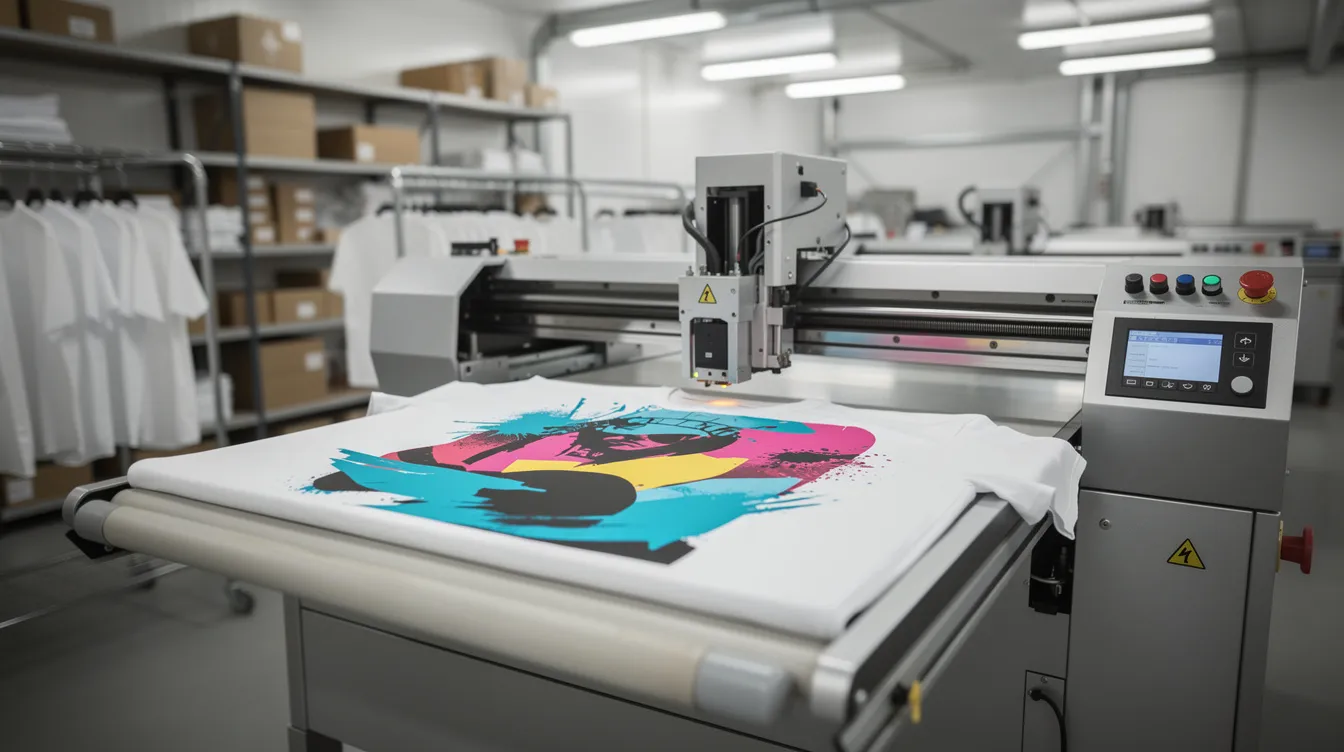
The print on demand vs dropshipping debate keeps coming back every year, but in 2026, the conversation has shifted. Rising ad costs, stricter marketplace policies, and more informed buyers have changed the playing field for both models. If you're considering a POD business, you need to understand the real economics - not the highlight reels from social media dashboards.
This article breaks down how print on demand actually works in 2026, where the money goes, and when it makes sense compared to traditional dropshipping.
Print on demand is a business model where physical products - like t shirts, hoodies, mugs, or home decor prints - are manufactured only after a customer places an order. There is no pre-purchased inventory. You start with zero inventory, and each item is produced individually when someone buys it from your online store.
Here's how it works in practice: you upload original designs to a print on demand company (sometimes called a third party print provider), connect your store on a platform like Shopify or Etsy, and the provider handles printing, packing, and shipping. Print on demand eliminates inventory risk for sellers, which is one of the model's strongest appeals. You never pay for unsold inventory sitting in a warehouse.
POD is typically white-label. The customer sees your brand on the product and packaging (depending on provider options), not the demand company's name. This distinguishes it from traditional wholesale or bulk printing, where you'd pay upfront for hundreds of units, store them yourself, and manage your own fulfillment.
The catalog of available custom products has grown significantly. Printful offers over 340 customizable products, while Printify provides access to over 900 products across various categories - from apparel to wall art to pet accessories. These numbers reflect the print on demand 2026 landscape: more variety, more print methods, and more options for sellers than even two years ago.
There is no minimum order. You can sell one item and have it produced and shipped without committing to a bulk run. That flexibility is what makes POD attractive for testing ideas, but it also means your production cost per unit is higher than ordering in bulk.
When a customer buys from your store, a chain of automated steps kicks in. Understanding this flow is important because every step introduces a cost component - base cost, shipping, payment processing - that will determine whether you actually make money.
Here's a typical POD order flow in 2026:
Many POD suppliers now offer automation tools that handle this entire cycle without you touching a single package. Print providers like Gooten connect to Shopify, Etsy, and WooCommerce. merchOne integrates with Shopify and Order Desk for multi-channel routing. The level of automation varies by provider, but the core idea is the same: when a customer orders, you don't have to do anything on the fulfillment side.
What matters is that each step - from the blank product to the final delivery - adds cost. The base costs shown in a POD catalog are just the starting point. Shipping, payment processing, marketplace commissions, and marketing all sit on top.
The core difference between print on demand vs dropshipping is what you're selling and how much control you have over the product.
POD makes print after each order using your unique artwork. You control the design, the branding, and (within provider limits) the product presentation. Dropshipping sells pre-made, mass-produced items sourced from suppliers. You pick products from a catalog, list them in your store, and the supplier ships them when someone buys. You typically have no direct control over product design or branding.
Here's how they compare on key factors:
Dropshipping offers endless product variety - from tech accessories to apparel to household goods - but the products are identical to what other sellers may list. Dropshipping relies on supplier reliability for product quality and timely fulfillment, and you have limited recourse if something goes wrong.
POD, by contrast, tends to attract buyers in specific niches: hobbies, fandoms, micro-communities, or audiences drawn to a particular aesthetic. The design is the product differentiator.
You can technically combine both models. Some stores use POD for branded apparel and home decor, then dropship complementary accessories. But the economics, operations, and marketing strategies differ for print on demand and dropshipping, so running both requires more operational discipline.
The year matters. In 2026, several conditions have shifted the dynamics of both models.
Competition has intensified. More sellers in both POD and dropshipping mean that standing out requires more effort, better products, and smarter marketing. Platform policies are stricter - marketplaces increasingly penalize slow shipping, poor reviews, and inconsistent product quality. And customer expectations have risen: people expect reliable delivery, decent packaging, and products that match the listing photos.
Here's how each model tends to perform in this environment:
Dropshipping is often quicker to set up due to the availability of existing products - you can list items and start selling the same day. POD requires a creative design component for success, which adds time and effort upfront.
Many shoppers in 2026 are more wary of "cheap dropshipping" quality. Delivery reliability and product quality increasingly influence which stores feel trustworthy. Both models require serious marketing work. Neither is a shortcut to quick profits, especially with rising ad costs on popular channels.
Here's where most beginners get tripped up: the cost of print on demand is not limited to "what the POD app charges." The base cost displayed in your provider's catalog is only one piece.
Total cost per order includes several categories, and ignoring any of them leads to mispriced products and disappearing margins:
Exact amounts vary widely between providers, countries, and product types. A mug costs differently than a hoodie, and shipping a poster domestically is different from shipping it internationally.
The useful way to think about print on demand costs is in terms of "landed cost per order" - the total you spend to get a finished product into a customer's hands. That number, subtracted from what the customer pays, is your gross margin before advertising and overhead.
Treat the sections below as a checklist for your own cost spreadsheet rather than expecting one universal benchmark.
Every POD order passes through the same set of cost buckets. Here's what each one involves and why it matters.
Product base cost is what you pay the POD provider for the blank item and basic print. A standard t shirt has a lower base cost than a hoodie or framed home decor print. Product costs are the single biggest visible expense in your POD invoice. Per-unit costs in POD are higher than bulk manufacturing, which is the fundamental trade off of the model.
Printing goes beyond the blank. Different print methods - DTG, embroidery, sublimation, cut-and-sew, all-over print - change your base cost substantially. Embroidery often incurs a one-time digitization fee. All-over prints are priced per surface area rather than a simple flat rate. Choosing a premium print method can justify higher prices, but it also narrows your audience. Printful provides custom branding options like inside labels for $0.99 each - a small per-unit add-on that's easy to overlook until you multiply it by hundreds of orders.
Shipping is both a line item and a perception issue. Customers expect clear tracking and reasonable delivery times. Shipping speed and cost depend on product weight, destination, and carrier. Customers react strongly to shipping fees - some sellers absorb them into the product price, others list them separately.
Platform fees include marketplace commissions (Etsy, Amazon) or ecommerce subscription costs (Shopify plans, WooCommerce hosting and plugins). These sit on top of what you pay your POD suppliers.
Payment processing takes a small but persistent cut. Credit card and wallet processors charge a percentage plus a fixed fee per transaction. Over hundreds of orders, this adds up.
Returns and refunds erode margins order by order. Some POD providers cover reprints for production errors, but customer-driven returns (wrong size, changed mind) typically fall on the seller. Print on demand products are non-refundable unless defective due to custom design, which simplifies some return scenarios but doesn't eliminate support costs.
Marketing is often the most variable and the most impactful cost. Paid ads, influencer collaborations, email tools, and the time spent on organic marketing all affect how much margin is left after acquiring each customer.
Design and content creation cost you in time or money - original artwork, listing copy, product photography, and mockups. Even if no cash outlay appears in the POD invoice, this work has real value and real opportunity cost.
Product base cost is the biggest visible cost lever in any POD business. It directly shapes your minimum viable sale price - the lowest you can charge without losing money on each order.
Production costs for print-on-demand shirts range from $6 to $13, depending on the blank quality, color, and provider. Printful's base price for a t-shirt is $11.75, which sits on the higher end but includes a specific blank and print standard. A standard t shirt from a budget-focused provider might start around $7, but print quality and blank fabric weight can differ noticeably.
Base cost usually bundles the blank product plus a standard single-location print. But it can vary by:
Choosing a premium print method raises both your production cost and the perceived quality of the finished product. Embroidery on a cap, for example, costs more than a simple DTG print on a tee, but many customers associate embroidery with higher quality and are willing to pay accordingly.
Some POD providers offer volume discounts or subscription tiers. Printify's monthly premium plan costs $29 and saves on production costs for each order. Whether that makes sense depends on your volume - if you're selling five items a month, a $29 subscription may eat more margin than it saves.
Before committing to a specific provider, compare base costs for the same product type and region across at least two or three platforms. Prices shift, and a difference of $2-3 per unit compounds quickly at scale.
Shipping is often the second-largest cost after base cost, and it's the one that customers feel most directly. A great design on a quality blank doesn't matter much if it arrives three weeks late or costs $9 to ship.
Shipping costs typically add $3 to $6 to the total order price for domestic deliveries. International shipments run higher, often $6 to $10 or more for the first item. Heavier products (hoodies, large canvas prints) cost more to ship than lightweight items like stickers or phone cases.
POD services can have variable shipping times based on production. Unlike a warehouse that ships pre-packed stock the same day, POD orders need to be printed, cured, quality-checked, and packed before they even reach a carrier. This can add two to five business days of production time before shipping transit even begins.
The location of fulfillment centers matters significantly. Printful operates seven in-house fulfillment centers across North America and Europe, using its own facilities to maintain consistency. Printify partners with over 140 printing facilities worldwide through its network of partner facilities. merchOne has production facilities in both the US and EU. Having fulfillment options close to your customer base enables fast local delivery, reduces customs friction for international sellers, and can lower shipping costs.
Some sellers roll shipping into the product price and advertise "free shipping." Others separate it. Both approaches affect perceived value and conversion rate, but neither changes the underlying expense. Customers expect transparency about delivery timelines regardless of pricing strategy.
Fulfillment speed - the combination of production time and shipping transit - directly impacts reviews and repeat purchases. A product that arrives in four days feels very different from one that arrives in sixteen.
Ecommerce platforms and marketplaces take a share of each sale. Many beginners underestimate these fees when calculating print on demand profit.
There are two main paths:
Payment processing applies in both scenarios. Stripe, PayPal, credit card networks, and digital wallets typically charge around 2-4% plus a small fixed fee per transaction. On a $25 order, that's roughly $0.75 to $1.25 - not dramatic on a single sale, but across hundreds of orders it becomes a real line item.
Platform fees are a cost of doing business and must be factored into your pricing before deciding whether print on demand is worth it for a specific niche. Check the current fee schedule on your chosen platform directly - fee structures change, and outdated tutorials often cite numbers that no longer apply.
Marketing spend is often the difference between a POD business that grows and one that never gets seen. This is especially true in 2026's crowded marketplaces, where organic discovery alone rarely drives enough volume for a new brand.
Core marketing channels relevant to POD include:
Rising ad competition can compress profit margins even when your base costs look attractive. If you're spending $8-12 to acquire a single customer on a $28 t shirt with a $14 landed cost, the math gets tight quickly. Generic designs in heavily saturated niches face the worst of this - you end up bidding against hundreds of other sellers for the same target audience.
Treat "cost per acquisition" as one of your most important metrics. Experiment with small budgets before committing to large campaigns. If you can attract more customers through organic channels - strong social presence, niche community engagement, SEO - your effective marketing cost drops and your margins improve.
Investing in brand assets (photography, consistent visuals, a clear brand story) can reduce reliance on pure discounting and competitive prices. Customers who connect with your brand are less price-sensitive and more likely to buy again.
Even with good product quality, some percentage of orders will have issues. Misprints happen. Sizes run differently across blanks. Packages get damaged in transit. Customers change their minds.
Most POD platforms have policies covering reprints and refunds for production errors - if the print is misaligned or the wrong item ships, the provider typically absorbs the cost. But customer-driven issues (ordered the wrong size, didn't like the color in person) usually fall on you as the seller. You either eat the cost of a replacement or issue a refund and lose the sale entirely.
Each reprint or refund erodes your profit margin on that order and on your overall numbers. Clear size guides, accurate product descriptions, and realistic mockups help reduce these issues. Showing the product on a model or in a lifestyle context (rather than just a flat mockup) can set more realistic expectations.
There's also the time cost of customer support: answering messages, resolving disputes, tracking replacements, and managing reviews. This operational overhead doesn't appear on any invoice, but it's real.
Setting realistic service policies and communicating shipping times and production timelines clearly on your product pages can significantly reduce complaints and support volume.
POD pricing starts from your total cost per order - base cost plus shipping plus all fees - and then adds a markup. That markup must cover marketing, overhead, and actual profit. If you set your retail price without accounting for all those layers, your margin will be thinner than you expect or nonexistent.
A common strategy is anchoring prices to perceived value in a niche. Premium products like detailed wall art or embroidered hoodies can support higher prices because the customer sees craftsmanship and uniqueness. A basic novelty t shirt in a crowded category faces downward price pressure because the customer can find something similar elsewhere for less.
Consider psychological pricing - whether you round to $29.99, $30, or $32 - but don't treat it as a magic lever. Test different price points with your actual audience and measure conversion rates. What works for one store may not work for another.
The more useful exercise is calculating a target minimum profit per item based on realistic cost assumptions. If your landed cost is $16 and your platform fees and payment processing take another $2.50, you need to charge at least $18.50 just to break even - before any marketing or design costs. Pricing at $24 gives you $5.50 of breathing room. Whether that's enough depends on how you acquire customers.
Some sellers prefer fewer, higher-margin orders with premium prices and premium products. Others aim for more volume at slimmer margins. Both approaches can work with POD, but both require accurate cost tracking.
Revenue is the total amount customers pay you. Profit is what remains after subtracting every cost. These are fundamentally different numbers, and confusing them is one of the most common errors in the print on demand space.
Here's what reduces profit on every order:
When someone posts a screenshot showing $10,000 in monthly store revenue, that number tells you almost nothing about profitability. After all costs, the actual profit on that revenue could be $1,500 - or it could be negative.
Track every expense category from the beginning, even if you start small. A simple spreadsheet that logs what the customer pays, what you pay per order (to the POD provider, the platform, the payment processor), and what you spend on marketing will give you more clarity than any revenue screenshot.
Understanding the difference between revenue and profit is essential before deciding whether POD is worth it or whether you should explore other ecommerce models.
Several levers influence how much you actually keep from each sale. None of them work in isolation.
Product choice is the most obvious lever. Items with higher perceived value - detailed wall art, premium hoodies, embroidered caps - may support stronger markups than commodity products like basic t shirts. The average profit margin on wall art through merchOne is 74%, illustrating how product category alone can dramatically shift economics. Higher quality blanks and print methods can justify prices that customers are willing to pay if the perceived value matches.
Niche and competition matter equally. Saturated, trend-based niches tend to push prices down because dozens of sellers offer visually similar designs. A well-researched, specific niche audience - think particular hobbies, professions, or subcultures - may tolerate higher prices because the design speaks directly to them and isn't available everywhere.
Fulfillment choices impact both cost and customer experience. Providers that operate their own facilities (like Printful's seven fulfillment centers) may offer more consistent production quality but at a higher base cost. Providers using large networks of partner facilities (like Printify's 140+ facilities) may offer lower base costs but with more variation between production locations. You can't always guarantee the same quality across different fulfillment sites within a network.
Brand strength and customer experience are the less tangible but equally important factors. A store with professional photography, a clear aesthetic, good reviews, and responsive support can charge more without hurting demand. Quality products paired with a strong brand create a virtuous cycle: better reviews attract more buyers, who are willing to pay fairly.
Some sellers build profitable POD businesses. Others lose money for months and quit. The model itself is neither automatically good nor bad - it's a tool, and results depend on how it's used.
POD can be worth it if you understand the cost structure, accept realistic margins, and build products people actually want to buy at the price you need to charge. The print on demand market is projected to reach $118.85 billion by 2035, and POD services grew 26% year over year due to reduced inventory risk. The pod industry is growing, but growth in the market doesn't guarantee growth for every individual seller.
The lower financial risk (no inventory to buy upfront) makes POD appealing for testing product ideas compared to buying stock. If a design doesn't sell, you haven't lost money on unsold units. That flexibility has real value, especially for creators and small businesses entering the pod market for the first time.
The decision depends on personal goals. Are you looking for a side income stream? Building a long-term brand? Exploring creative expression? Each of these paths works differently within the POD model, and each requires a different level of commitment.
Think in experiments. Start with a small catalog and a modest marketing test. Measure what actually sells, what your real costs are, and whether the margins support scaling. Don't commit to POD as a decade-long strategy before you've validated whether your particular approach generates profit.
POD is better suited for some business profiles than others. It shines when design and brand are central to the value proposition.
Scenarios where POD works well:
POD works well for catalog types like apparel, mugs, posters, home decor, and wall art where customization is a clear value-add. MerchOne offers the widest home decor catalog in the industry, which matters if that's the category you want to sell in. Print on demand requires a creative design component for success - if you have that strength (or can hire it), POD rewards it.
Match your skills - design ability, community building, storytelling - to POD's strengths before committing resources.
POD is not the best option for every product or every founder.
Cases where traditional dropshipping or bulk manufacturing might be better:
If you dislike branding, design, and niche selection - and only want to sell existing products - classic dropshipping may align more with your approach. Dropshipping can lead to intense competition due to identical supplier products, but if price arbitrage is your skill set, that model may suit you better.
Be honest with yourself: if the main motivation is finding a "set and forget" system, neither POD nor dropshipping will likely meet expectations in 2026. Both require ongoing work.
Readers often ask which model has "better margins." The honest answer: it depends entirely on the products, the marketing channels, and the operator.
POD usually has a higher per-unit base cost but can justify higher prices due to uniqueness. When a customer buys a design they can't find elsewhere, price sensitivity drops. Dropshipping has lower profit margins due to price competition and reliance on generic products - when five stores sell the exact same phone case from the same supplier, the only differentiator is price.
Each model absorbs shipping differently. POD sellers typically use their POD provider's shipping rates, which are negotiated but not always the cheapest. Dropshippers often choose from multiple logistics providers or suppliers with varied shipping terms, which can offer competitive prices on shipping but with less predictability on delivery times and quality.
Here's the fundamental trade off: POD's higher cost structure can yield better margins per order when the design resonates, the niche is well-chosen, and the brand is strong. Dropshipping's lower cost structure can yield volume-based profit when you find winning products and can scale ads efficiently. Both can be profitable or unprofitable. The difference lies in how well you manage costs, differentiate your catalog, and acquire customers efficiently.
Don't chase percentage margins as an abstract goal. Focus on absolute profit per order after all costs, and whether you can sustain the marketing spend needed to keep orders flowing.
Testing before scaling is non-negotiable in 2026. It prevents over-investing time and ad spend into designs or niches that don't resonate.
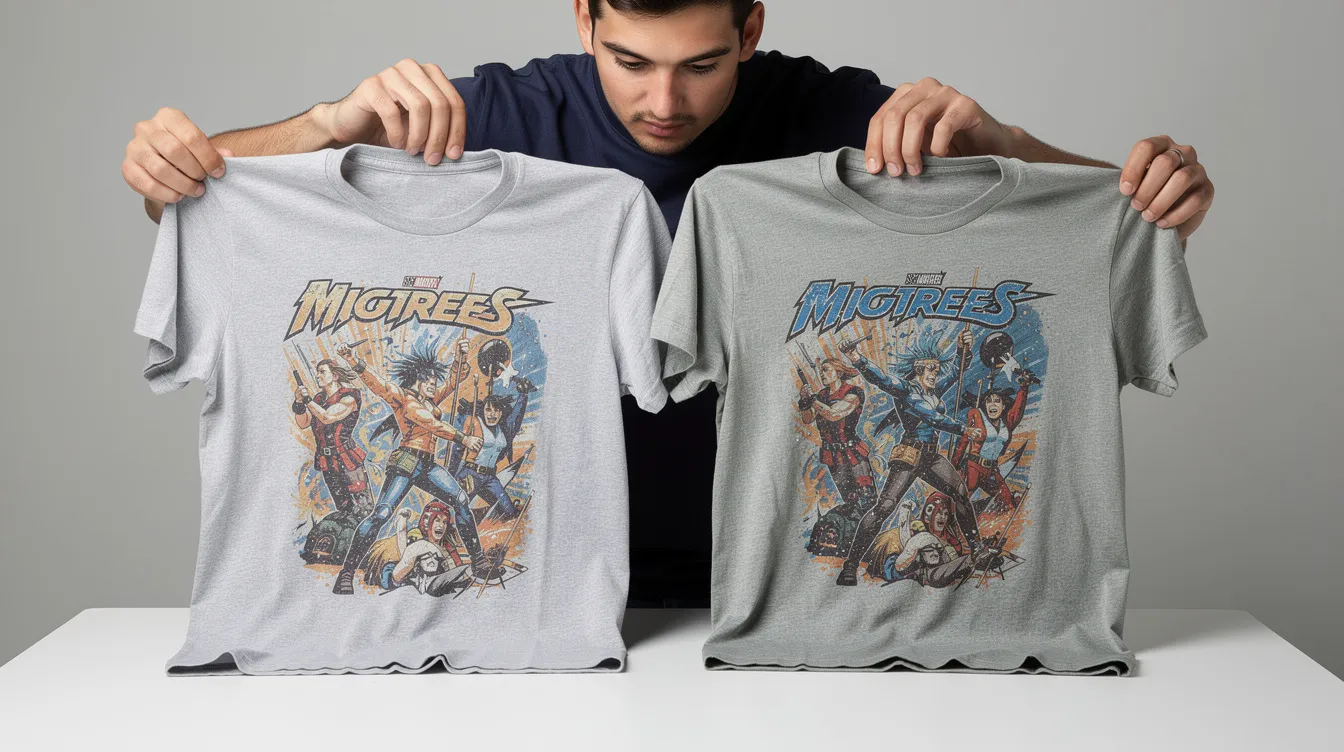
Start by ordering physical samples. Order samples from your specific provider and check product quality, print detail, color accuracy, fabric weight, and packaging. Mockups often over-promise - colors look different on screen than on fabric, and print placement can shift slightly. If you're evaluating multiple POD providers, order the same design from at least two to compare results.
Then follow a simple validation flow:
Use A/B tests on pricing, product mockups, and design variations to understand what your target audience actually values. A design that sells well at $28 might sell even better at $32 if the mockup photography improves.
Once a design shows proven demand, you can decide whether to keep it in POD, negotiate better terms with your provider, or explore bulk production for even better margins. The point is to let data guide your decisions, not assumptions.
Most POD failures come from avoidable strategy and execution errors, not from choosing the wrong platform.
Frequent mistakes include:
Build a simple, focused catalog first. Measure what works. Expand from proven performance, not from hope.
POD is not just a supplier choice. It forms the backbone of your entire ecommerce system - from product creation to customer delivery.
A typical POD tech stack includes your ecommerce platform (Shopify, WooCommerce, or a marketplace), the POD app or integration, analytics and tracking tools, email marketing software, and your marketing channels. Each component needs to work together smoothly.
The reliability of your POD partner directly influences your brand reputation, reviews, and repeat purchase rates. Customers never see the fulfillment backend, but they feel its effects: how long production takes, how securely the product is packed, whether the print matches the listing photo. A single bad fulfillment experience can result in a negative review that costs you future sales.
This is why choosing a provider isn't just about base costs. Fulfillment speed, print consistency, support responsiveness, and integration stability all matter. Printify supports API access for custom integrations, which can be valuable as your store grows and you need more sophisticated order routing or reporting.
For readers exploring broader ecommerce topics - like dropshipping alternatives, how to start an online store, or Shopify for beginners - webgru.com offers additional resources across those subjects. And for structured, step-by-step guidance through POD and other ecommerce models, the Webgru E-Commerce & AI Academy and its broader e-commerce courses and AI training programs serve as the main learning path.
If you're planning to launch a store from scratch, the 90-day roadmap to your first $10K online walks through foundations, validation, and scaling step by step, while the beginner e-commerce learning roadmap for 2026 outlines what to learn first so you don't get lost in tactics.
As your business grows, you can explore AI for e-commerce automation and growth strategies to systemize support, marketing, and operations. If you're comparing education options, the guide on how to choose the best e-commerce course in 2026 explains what to look for (and avoid) before investing in training.
For those wanting deeper support and automation, the E-Commerce & AI Academy and its system-based training programs focus on building, scaling, and automating real online businesses. And if you need direct help or want to explore collaboration, you can contact the Webgru team or get in touch for strategy calls and partnerships.
Neither print on demand nor dropshipping wins by default. The best fit depends on your goals, your strengths, and the kind of business you want to build.
Ask yourself a few questions:
Some entrepreneurs start with POD to validate a specific niche, then add dropshipped accessories to complement their catalog. Others discover that a design sells well enough to justify moving to bulk manufacturing. There's no single correct sequence.
Think beyond 2026 trends. Build a model you can sustain for several years, not just chase this year's hype. Whether you choose POD, dropshipping, or a hybrid, treat it as a long-term learning path. The sellers who grow are the ones who keep refining their operations, testing new products, and learning from their numbers.
If you want to sell physical products online and are considering which model to start with, commit to understanding costs before committing to inventory or ads. That's the single most practical step you can take today.

Neither model is automatically more profitable. Profit depends on what you sell, how much you pay to acquire customers, and how well you manage all your costs. POD typically has higher base costs per item but lets you charge higher prices for unique designs. Classic dropshipping can have lower base costs but faces intense price competition since many stores sell the same supplier products. Instead of relying on generic "average" profit margins, model both scenarios with your own numbers - using real platform fees, actual supplier quotes, and realistic marketing budgets.
Yes. Many sellers combine both - for example, POD for branded apparel and home decor, plus dropshipping for complementary gadgets or accessories. The key is keeping branding consistent and clearly communicating shipping expectations. Different fulfillment methods often mean different delivery times, and customers need to understand that upfront. Running both models increases operational complexity, so beginners may want to start with one and add the other after building stable processes.
Evaluate providers based on product quality, catalog fit (some excel at t shirts, others at wall art and home decor), integration with your ecommerce platform, and fulfillment regions. Order samples from at least two providers to compare print detail, fabric or material feel, and packaging before committing. Check up-to-date documentation and reviews for production times, support responsiveness, and policies around returns and reprints. The best print provider for your business is the one that delivers consistently to your specific customers, not necessarily the cheapest on paper.
Design skills help, but they're not strictly required. Many sellers work with freelance designers, buy licensed design assets, or start with simple text-based concepts that resonate with a specific niche. What matters more than artistic complexity is relevance to your audience. A clean, well-targeted design often outperforms an intricate illustration that doesn't connect with anyone. Avoid copying copyrighted or trademarked content - the legal and platform risks are not worth it. Original or properly licensed artwork is essential.
Broad, generic markets - like random motivational quotes on t shirts - are highly competitive in 2026. But focused niches with well-researched audiences and high-quality designs still offer room for new brands. Saturation is a signal to specialize, differentiate, and raise product quality, not a reason to dismiss POD entirely. The sellers who struggle most are the ones entering crowded categories with undifferentiated designs and no clear brand identity. The ones who thrive tend to serve a specific audience with designs those people can't easily find elsewhere.
Our latest news and trending topics
Learn E-Commerce with clarity, discipline and real experience.


.png)
.avif)