Customer Lifetime Value for Small Stores: How to Measure and Improve It
Learn how to calculate customer lifetime value in e-commerce, understand CLV vs. CAC, and improve retention, repeat purchases, and customer value.
TABLE OF CONTENT
Most small ecommerce stores pour energy into getting the first sale and then move straight on to hunting the next new customer. That approach leaves money on the table. Customer lifetime value shifts the focus from a single transaction to the full economic relationship between a store and its buyer, giving you a practical framework for smarter spending, better retention, and stronger growth over time. This article walks you through what CLV means, how to calculate it, what drives it, and how to improve it, even if you are running a small Shopify store with limited data.
Key Takeaways
Most small ecommerce businesses measure success by individual orders. Customer lifetime value (CLV) takes a wider view: it estimates how much revenue or profit a single customer generates across their entire relationship with your store. When you understand CLV, it stops being about one order and starts being about the full customer journey.
For a small Shopify or ecommerce store, the customer lifetime value formula (Average Order Value × Purchase Frequency × Average Customer Lifespan) is usually enough to start making better acquisition, retention, and budget decisions.
CLV is most useful when compared to customer acquisition costs and used to guide marketing spend, email flows, product strategy, and customer experience rather than treated as a vanity metric to report once and forget.
Improving customer lifetime value means improving customer experience, relevance, and retention. Concrete examples include better post-purchase onboarding, smarter automated email flows that remind customers to reorder at the right time, and making it easier to re-purchase with one click.
This article gives a complete beginner-friendly roadmap: a simple CLV calculation, a worked example (including a coffee shop and a small online store), the core drivers of CLV, practical ways to improve it, and how to track it with tools like Shopify reports and basic spreadsheets.
What Is Customer Lifetime Value?
Customer lifetime value is an estimate of the total revenue or profit a typical customer brings to your business from their first purchase through their last. In an ecommerce or small store context, it puts a dollar figure on the customer relationship so you can make decisions based on data rather than gut feeling.
Customer lifetime value (CLV), CLTV, and LTV are closely related terms. Many teams use CLV and LTV interchangeably, but some finance departments draw distinctions: LTV may refer to an individual-level projection, CLV to an average across a customer base, or one may be revenue-based while the other is profit-based. For practical purposes in most small stores, these differences are minor.
CLV predicts total revenue from a customer over their lifetime, helping store owners understand the future value of their customer relationships rather than focusing only on the most recent order.
CLV reflects the strength and quality of customer relationships. A rising CLV generally means customers are satisfied, products fit well, and communication is effective.
When thinking about CLV, it helps to know there are two flavors: revenue CLV (top-line, total sales) and profit-based CLV (which accounts for gross margin, shipping costs, and other expenses). Both are useful, and we will cover the difference in detail later.
Why Customer Lifetime Value Matters in E‑Commerce
In ecommerce, ad costs and competition keep rising. Relying only on first-order profit is risky because a single transaction rarely covers what it cost to acquire that customer. CLV helps small stores understand the long-term value of a customer relationship, providing a clearer picture of future revenue streams for better forecasting.
Understanding CLV helps optimize marketing budgets and customer acquisition strategies. For example, it shows how much you can safely spend on paid ads, which channels bring the most valuable customers, and whether certain products attract higher-lifetime buyers.
CLV helps businesses prioritize high-value customers for retention. When you know which customer segments have high customer lifetime value, you can decide who should get free shipping offers, early product access, or dedicated support.
Customer retention initiatives can often provide a higher financial return than constant new customer acquisition. CLV makes the case for investing in existing customers visible in dollars.
Improving CLV can lead to increased profitability for businesses, and it also supports better cash-flow planning and inventory decisions by making repeat-purchase patterns more predictable.
Customer Lifetime Value vs. Customer Acquisition Cost
Customer acquisition cost is straightforward: total marketing and sales cost in a period divided by the number of new customers acquired in that period. If you spent $10,000 on ads and labor in a month and gained 200 new customers, your CAC is $50.
Businesses measure CLV alongside customer acquisition cost because the two metrics answer different halves of the same question. CAC is what you pay to get a customer. Customer lifetime value is what that customer contributes over time.
CLV can inform businesses on how much they can afford to spend on marketing to acquire customers. If your profit-based CLV is $60 and your CAC is $40, there is room for the economics to work. If CAC is higher than CLV, the business model is unsustainable.
CLV should exceed CAC for sustainable business growth. A commonly cited guideline is that a healthy CLV to CAC ratio is typically 3:1 or higher. McKinsey found CLV to CAC ratios should be between 2:1 and 8:1, depending on the industry and business model.
There is no universal "right" ratio for all stores. Acceptable economics depend on margin, repeat purchase cycle, category (fast-moving consumables vs. luxury goods), and access to capital.
Hypothetical example: Suppose it costs $40 in ads and discounts to acquire a new customer. That customer's revenue CLV is $150 and, after accounting for a 40% gross margin, their profit CLV is $60. Because profit CLV exceeds CAC, this acquisition is viable, but cash flow timing and margin structure still matter.
How to Calculate Customer Lifetime Value
There are many customer lifetime value models, from simple spreadsheets to predictive machine learning. Most small ecommerce stores should start with a simple, revenue-based customer lifetime value formula and upgrade later as their data matures.
The beginner-friendly formula in its simplest form:
CLV ≈ Average Order Value × Average Purchase Frequency (per year) × Average Customer Lifespan (in years)
This aligns with the standard definition: CLV equals average transaction size multiplied by the number of transactions multiplied by the retention period.
Average order value (AOV): divide total revenue in a period by the number of orders in that period.
Purchase frequency: divide the total number of orders by the number of unique customers over the same period.
Average customer lifespan: estimate how many years customers continue purchasing. For newer stores, this may be a rough estimate based on repeat purchase patterns.
This approach produces a revenue CLV. More advanced setups may adjust for gross margin, refunds, and discounts, but beginners do not need to start there. Historical CLV sums all revenue generated by a customer over time, while predictive CLV uses statistical methods to forecast future customer behavior. Small stores should begin with historical CLV and consider predictive customer lifetime value models as data grows.
Calculating customer lifetime in very young stores will be more approximate. Update your estimates regularly as more real customer data accumulates over the first 6 to 12 months.
Example Customer Lifetime Value Calculation
Let's walk through a concrete, hypothetical example for a small DTC skincare brand that also sells online.
Average order value: $40
Purchase frequency: 4 orders per year
Average customer lifespan: 3 years
CLV = $40 × 4 × 3 = $480 in revenue over the customer lifetime.
This tells the store owner that, on average, each customer is expected to generate $480 in total revenue. It provides an upper limit on what the store can afford to spend on acquiring a new customer while remaining profitable.
For a different scenario, consider a coffee shop that also sells beans and accessories online. A coffee shop's CLV example is $2,000 over five years. If a customer spends roughly $5 per drink, visits twice per week for about 45 weeks per year over four years, that's approximately $5 × 90 × 4 = $1,800 in revenue CLV. Frequent, low-ticket purchases add up quickly.
For contrast, consider entirely different categories: a car dealership's CLV example is $90,000 over 15 years, showing how dramatically CLV varies by product type and price point.
These customer lifetime value examples help set acquisition budgets: if CLV is $480, spending $200 to acquire each customer may or may not be viable depending on gross margin, shipping costs, and fulfillment expenses.
All numbers above are hypothetical learning examples, not industry benchmarks.
Revenue CLV vs. Profit-Based CLV
Revenue CLV counts only top-line sales. Profit-based CLV subtracts costs like product cost, shipping subsidies, payment processing fees, and refunds, or multiplies revenue by gross margin percentage. The difference matters because gross margin is essential for accurate CLV calculations.
A simple profit-adjusted CLV might look like this:
Profit CLV ≈ Revenue CLV × Gross Margin %
Using the earlier hypothetical: $480 × 0.45 = $216 estimated gross profit over the customer lifetime.
Relying only on revenue CLV can be misleading in low-margin categories like groceries or consumer electronics, where high revenue does not automatically translate to high profit. Two stores can both have $300 revenue CLV, but if one operates at 50% margin and the other at 20%, their profit CLVs are $150 and $60 respectively.
For many small ecommerce stores, starting with revenue CLV is fine as long as you understand its limitations and eventually move toward margin-aware CLV as data and accounting improve.
The time value of money can be incorporated into more sophisticated CLV calculations using discounted cash flow methods, but this level of complexity is generally unnecessary for early-stage stores.
The Main Drivers of Customer Lifetime Value
Customer lifetime value is not a mysterious output. It is driven by specific levers that a store owner can influence. Customer lifetime value improves when customers buy more per order, buy more often, and stay active longer.
Average order value significantly impacts customer lifetime value. Anything that increases order size, such as bundles, cross-sells, or free-shipping thresholds, contributes to higher CLV.
Purchase frequency is crucial for increasing customer lifetime value. The more often customers reorder, the faster CLV accumulates. This depends on product type (consumable vs. durable), satisfaction, and communication.
Customer lifespan directly affects the calculation of CLV. The longer customers remain active, the more they contribute over time. Customer retention depends on product quality, support, and how easy it is to buy again.
Gross margin determines how much of that revenue actually becomes profit. A high revenue CLV with razor-thin profit margins may still leave a business struggling.
Product fit and customer satisfaction drive fewer returns and more reorders.
Acquisition channel quality matters: some sources bring target customers who tend to repurchase more, while others bring bargain hunters who buy once and disappear.
Improving customer lifetime does not mean pushing unnecessary products. It means delivering enough value that existing customers naturally choose to buy again over months or years.
How to Improve Customer Lifetime Value
CLV improvement comes from a combination of better customer experience, more relevant offers, and thoughtful communication across the entire customer lifecycle. Retention strategies such as onboarding, loyalty programs, and proactive support can maximize CLV.
This section covers six practical levers, each expanded below, suitable for small ecommerce and Shopify merchants without data science teams:
Improve the first purchase experience
Encourage relevant repeat purchases
Build better post-purchase communication
Use segmentation instead of blanket campaigns
Reduce preventable churn and friction
Improve average order value carefully
All strategies should be measured where possible (via email metrics, repeat purchase rate, cohort performance) so CLV improvements are based on customer data, not guesswork.
Improve the First Purchase Experience
Customer lifetime often depends on the first experience. When a product arrives on time, matches expectations, and is easy to use, first-time buyers are far more likely to become repeat customers. This is where the entire customer journey begins.
Optimize product descriptions and photos so they accurately represent what the customer will receive. Mismatched expectations are a leading cause of returns and lost trust.
Show transparent shipping costs and delivery timelines before checkout. Surprise fees are one of the fastest ways to destroy customer satisfaction.
Simplify the checkout process, especially on mobile. Every unnecessary step reduces conversions.
Send clear order confirmation and tracking emails so buyers feel informed and confident.
For complex products (skincare routines, specialty coffee brewing), include a basic onboarding flow: a quick-start guide, usage tips, or a short video. This reduces returns and increases the chance of a second purchase.
Responsive, friendly support on first orders can turn minor problems into positive experiences that build long-term customer value and brand loyalty.
Encourage Relevant Repeat Purchases
Once a customer has a good first experience, the next job is to make the second and third purchases timely and relevant, not spammy. This is how you increase customer lifetime through natural purchasing behavior.
For consumable products (coffee beans, supplements, skincare), send replenishment reminders based on typical usage windows. If a bag of coffee lasts about three weeks, send a reminder at day 18.
Showcase complementary products: filters with coffee, accessories with electronics, refills with devices.
Use automated email flows or SMS to trigger reminders when historical data suggests customers are likely running low.
Offer small, relevant bundles or "frequently bought together" suggestions that genuinely help customers solve a problem, rather than aggressive upselling that harms the customer relationship.
Loyalty programs can increase customer retention significantly. Even a simple points-based program gives loyal customers a reason to come back instead of shopping elsewhere.
Build Better Post‑Purchase Communication
CLV grows when customers feel guided and supported after buying, not forgotten until the next promotion. Consistent communication keeps customers engaged across the entire customer lifecycle.
A simple, ideal post-purchase sequence for small stores:
Order confirmation
Shipping and delivery updates
Product usage tips or care instructions
Review or feedback request
Follow-up with the next logical product or reorder prompt
Use basic ecommerce automation (Shopify flows, email platform automations) to send these messages consistently. Even small teams can set this up once and let it run.
Include value-first content in post-purchase emails: brewing guides, styling tips, how-to videos. Make communication genuinely helpful, not just discount-driven.
Consistent, calm post-purchase communication reduces support tickets, builds trust, and increases the likelihood of long-term customer lifetime value improvements.
Use Segmentation Instead of Sending Everything to Everyone
Different customers have different customer value and interests. Blanket campaigns tend to underperform compared to targeted communication. Customer segments with higher CLV allow companies to focus their sales efforts more efficiently.
Start with simple segmentation: first-time vs. repeat buyers, high vs. low CLV segments, product category purchased, or order value tiers.
Create specific flows for your most valuable customers (early access to new products, exclusive offers) and separate win-back flows for customers who have not purchased in a defined period.
Personalized experiences enhance customer relationships and retention. When you segment customers based on behavior and value, messages become more relevant.
Avoid over-complication. Start with 3 to 5 segments and simple rules rather than dozens of micro-segments that are hard to maintain.
Better segmentation leads to more relevant messages, fewer unsubscribes, and over time, higher customer lifetime value.
Reduce Preventable Churn and Friction
Customer churn means customers who stop buying and do not return within a reasonable period based on your category's normal purchase cycle. Reducing churn can significantly increase customer lifetime value, and improving customer retention is often more profitable than acquiring new customers.
Common friction points that shorten customer lifetime: slow or unreliable delivery, confusing sizing or fit, complex return processes, unresponsive support, and inconsistent product quality.
Gather feedback through post-purchase surveys, reviews, and support logs to identify recurring problems that hurt CLV.
Prioritize the biggest issues first. If sizing confusion drives 40% of returns, fix the sizing chart before optimizing email subject lines.
Not every customer can or should be saved. If the fit is genuinely wrong, it is better to let them go than to retain customers at any cost with heavy discounts.
Compensating for one lost customer requires acquiring three new ones, which makes fixing preventable churn one of the highest-ROI activities for any small ecommerce business.
Churn rate influences customer lifetime value significantly. Even a small reduction in churn extends the average customer lifespan and compounds revenue over time.
Improve Average Order Value Carefully
Average order value is a lever inside the customer lifetime value formula, but pushing it too aggressively with upsells can damage trust and hurt long-term CLV. Increasing average order value boosts customer lifetime value, but only when done thoughtfully.
Customer-friendly AOV tactics: relevant bundles, "buy more save more" offers, free-shipping thresholds aligned with profitability, and complementary add-ons that solve real problems.
Test small changes (modest threshold increases) and monitor the impact on conversion rate, repeat purchase rate, and refund rate before rolling out broadly.
A higher average order does not automatically mean better profitability. If the increase comes with higher returns or complaints, profit-based CLV may actually drop.
Focus on sustainable average order value improvements through better average purchase value rather than one-time spikes from aggressive promotions.
Customer Lifetime Value by Cohort
A cohort is a group of customers who share a starting characteristic, such as the month they first purchased or the acquisition channel they came through (Google Ads vs. organic search vs. email).
Cohort-based customer lifetime value views help small stores see whether newer customers are better or worse than earlier ones, and which acquisition sources produce the most valuable customer segments.
Simple cohort comparison: customers acquired in January vs. April, or customers whose first purchase was a sample kit vs. a full-size product. Compare their CLV after 6 or 12 months.
Cohort analysis does not have to be technical. Even a spreadsheet with columns for cohort month, revenue to date, and average number of customers can reveal clear differences in customer lifetime value.
Without cohort views, averaging everything together can obscure problems. Overall CLV may look stable while recent cohorts show declining repeat frequency or shorter customer lifespan.
Cohort insights directly inform marketing and product decisions: invest more in channels that produce higher-CLV cohorts and improve onboarding where cohorts underperform.
How to Track Customer Lifetime Value in a Small Store
Tracking CLV does not require expensive software. Start simple and build up as the store grows.
Stage 1 (Basic): Use built-in ecommerce platform dashboards. Shopify, BigCommerce, and similar platforms provide metrics like average order value, repeat customer rate, and basic customer lifetime value estimates, and you can gradually layer in AI-driven automation to streamline ecommerce workflows without hiring large teams.
Stage 2 (Spreadsheet): Export order and customer data (customer ID, order date, order value, refunds) and calculate CLV by customer or by cohort. A simple spreadsheet with order history grouped by customer email is enough to measure customer lifetime value for most small stores.
Stage 3 (CRM/Analytics): Connect store data to an email platform, CRM, or analytics tool that tracks customer behavior over time and can automatically identify high value customers and segment customers for targeted flows.
Consistent customer identifiers (email address or customer ID) are essential. Without clean data linking orders to specific customers, CLV calculations become unreliable.
Customer Lifetime Value and Your Ecommerce Data System
Accurate CLV depends on trustworthy data flowing between your ecommerce platform, analytics tools, and marketing systems. If different tools show conflicting order or customer counts, your CLV estimates will be unreliable.
Key systems that touch customer data: ecommerce platform (e.g., Shopify), analytics (e.g., Google Analytics), email or marketing automation tools, payment processors, and where applicable, a CRM.
Choose a primary source of truth for customer revenue and orders, usually the ecommerce platform, and ensure other tools pull or sync from it rather than maintaining separate, conflicting records.
As stores grow, more structured data setups like central data warehouses or customer data platforms may become useful. But many small ecommerce brands can start with careful use of built-in integrations and by deliberately avoiding ecommerce tool chaos caused by disconnected apps and ad‑hoc processes.
Resources like ecommerce systems stack guides or frameworks covering the core ecommerce systems can help deepen your understanding of how to connect these tools effectively as your business grows.
Common Customer Lifetime Value Mistakes
Misusing CLV can lead to overconfident decisions. These are the most frequent pitfalls small stores fall into.
Treating CLV as a fixed, unchanging number rather than a moving estimate that should be revisited as customer behavior, competition, and costs change.
Calculating only revenue CLV while forgetting about costs, leading to an inflated sense of how much revenue each customer actually delivers to the bottom line.
Averaging all customers together and ignoring segments or cohorts. This masks differences between high value customers and one-time bargain hunters.
Neglecting refunds, discounts, and chargebacks in CLV calculations, which can overstate the future value of a customer relationship.
Using too little historical data (a few weeks or months) to project very long customer lifetimes, especially in new stores where purchasing behavior is not yet stable.
Comparing your store's CLV to generic "industry benchmarks" without context. A $200 CLV might be excellent in one category and mediocre in another.
Optimizing CLV at the expense of honest communication and customer experience. If you push repeat purchases so hard that customers feel pressured, you may reduce CLV rather than improve it.
Confusing CLV with average order value. AOV measures a single transaction. CLV measures the entire relationship.
What Is a Good Customer Lifetime Value?
There is no single "good" CLV number across ecommerce. What counts as good depends heavily on profit margins, price points, category, repeat-purchase patterns, and business model.
Focus on trends over time. Is your CLV improving over the last 6 to 12 months? That matters more than hitting an arbitrary target.
Focus on the relationship between CLV and CAC. A modest CLV with very low acquisition costs and healthy cash flow can be perfectly sustainable. Other stores sustain higher CAC because their high customer lifetime value pays off over several years of recurring revenue.
Compare CLV across segments within your own store (by channel, product type, or country) to identify which areas are performing well relative to others, rather than chasing generic thresholds.
The useful question is not "Is my CLV high?" It is "Is customer value improving relative to acquisition cost, margin, and business economics?" This supports sustainable revenue growth as a business growth strategy rather than short-term thinking, and some teams choose to get outside help from e-commerce strategy and systems specialists when they feel stuck.
A Simple CLV Improvement Workflow
This is a practical, repeatable loop that small ecommerce teams can run quarterly or twice a year to steadily increase customer lifetime value.
Calculate a current CLV baseline using the simple formula and your store's actual data.
Segment or cohort your customer base by first purchase month, acquisition channel, or product category.
Identify the limiting factor. Is it AOV, purchase frequency, or customer lifespan that is weakest? Look at each component separately.
Pick one hypothesis. For example: "Better onboarding emails will increase the second-purchase rate within 60 days."
Implement a specific change. Build the email flow, adjust the product page, or launch a small bundle test.
Measure the effect over a defined period using relevant metrics (repeat rate, cohort CLV, average revenue per customer).
Compare results across cohorts or segments to see if CLV or early indicators improved.
Decide and document. Scale the change, adjust it, or try a new experiment. Write down what changed, why, and what happened.
This way, CLV becomes an ongoing improvement practice rather than a one-off calculation. Each iteration gives you better data and sharper marketing efforts.
Customer Lifetime Value Dashboard for Small Stores
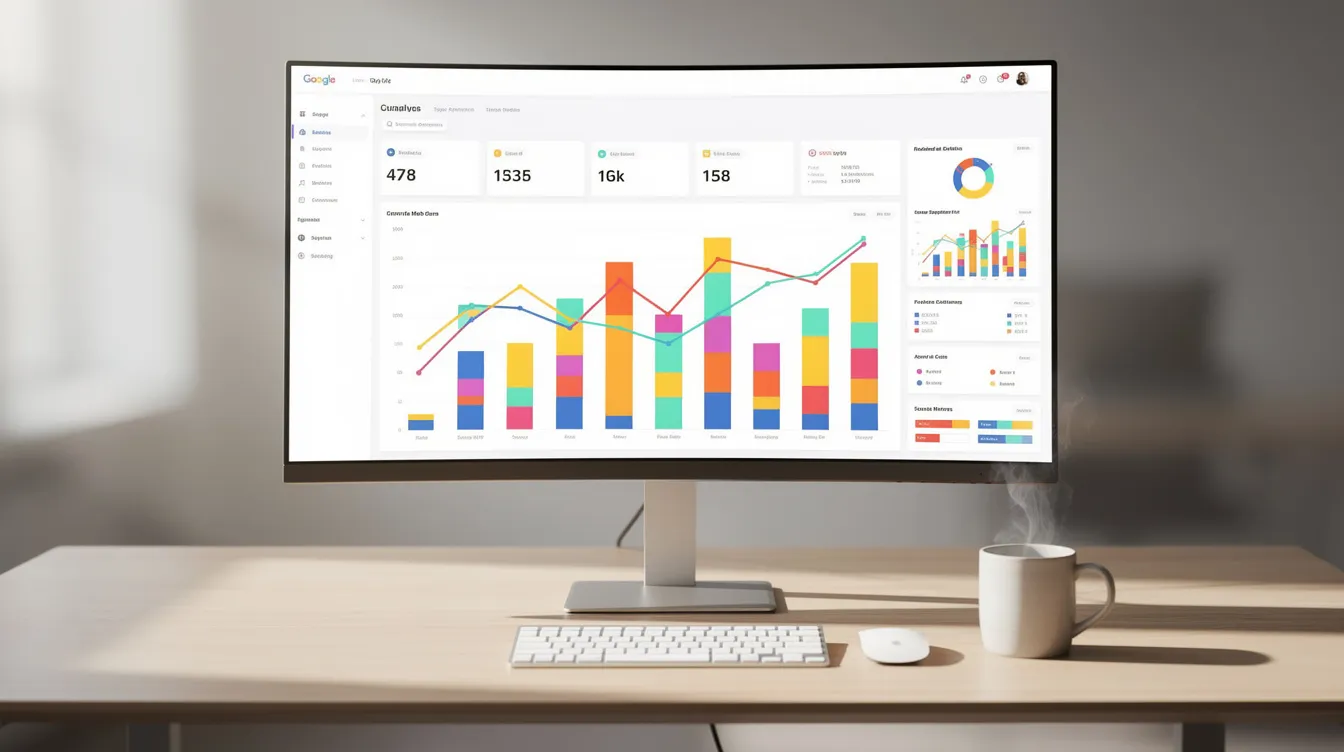
A simple CLV dashboard helps small teams monitor the health of customer relationships at a glance and align on priorities. It does not need to be complex.
Revenue CLV: Overall long-term customer value
Average Order Value (AOV): Whether customers are spending enough per transaction
Purchase Frequency: How often customers return to buy again
Repeat Customer Rate: The share of orders from repeat customers vs. new customers
Average Time Between: (explanation missing in original table)
This dashboard can live inside existing tools: Shopify analytics, a spreadsheet, or a simple BI tool. Review it on a regular cadence, such as monthly, so you can spot problems early and maximize revenue from your existing customer base.
FAQ
These are common follow-up questions small ecommerce owners have after learning the basics of customer lifetime value. Each answer focuses on practical ecommerce implications rather than advanced theory.
How often should a small ecommerce store recalculate customer lifetime value?
Most small stores benefit from recalculating CLV quarterly. This gives enough time for customer behavior patterns to emerge without letting outdated assumptions linger too long. If your store is growing rapidly or you have made significant pricing or product changes, monthly recalculations of the core inputs (AOV, purchase frequency) may be worthwhile.
Stores under one year old should treat early CLV results as rough estimates. Update them as cohorts mature and enough historical data accumulates to stabilize the numbers. Document each recalculation with the date, method, and key assumptions so that trends over time become clearer.
What's the difference between Customer Lifetime Value and average order value?
Average order value measures how much a customer spends per transaction. Customer lifetime value measures how much they spend across all purchases over the entire customer relationship. AOV is a snapshot. CLV is the full movie.
A customer with an average purchase of $50 who orders twice per year for three years has a CLV of $300 in revenue, which is far higher than any single order. Focusing only on AOV can cause stores to ignore customer retention and purchase frequency, which are often the biggest levers for growth.
How can a brand-new store work with CLV if there isn't much data yet?
New stores can start with simple assumptions based on expected behavior. Estimate how often a realistic customer might reorder, use your current AOV, and apply a conservative lifespan assumption. Then refine as real data comes in over the first 6 to 12 months.
Focus early efforts on building the foundations that support high future CLV: excellent customer service, clear communication, and basic customer lifetime value-supporting email flows for welcome, post-purchase, and win-back sequences. Track early indicators like second-purchase rate within 30 to 60 days. Treat CLV as an evolving estimate, not a permanent number.
Does CLV work differently for subscription products vs. one‑off purchases?
For subscriptions, CLV is often simpler to estimate. Average monthly revenue per subscriber multiplied by the average subscription length gives a solid baseline, optionally adjusted by gross margin and support costs. The recurring revenue pattern makes prediction more straightforward.
For one-off or irregular purchases like fashion or home goods, CLV depends more on repeat purchase behavior and retention tactics, making cohort and customer behavior analysis especially important. Some stores combine both models (one-time purchases plus optional subscriptions) and should consider separate CLV calculations for subscribers vs. non-subscribers where possible. The core concept is the same; the way customer lifetime is realized differs.
How does customer service impact customer lifetime value in small ecommerce stores?
Responsive, helpful support increases the likelihood of repeat purchases, turning one-time buyers into loyal customers and raising CLV over time. Improving customer service can prevent declines in CLV even when occasional product issues arise.
Service behaviors that support higher customer lifetime value include fast responses to order issues, fair and transparent return policies, proactive communication when delays happen, and clear self-service resources like FAQs. Excellent customer service turns a cost center into a retention engine. Poor service (slow replies, blame-shifting, or ignoring complaints) shortens customer lifetime and generates negative reviews that also hurt new customer acquisition. Small stores should treat support as an investment in long-term customer value.




.png)
.avif)